Set-Piece Coaches Become 2026 World Cup Knockout Phase X-Factors
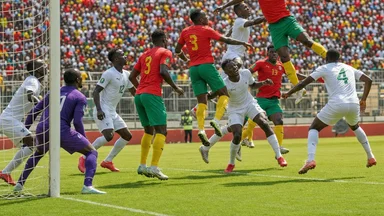
In the knockout phase of a World Cup, matches often hinge on a single moment. With open-play chances scarce and defences well-drilled, the dead ball has become the most reliable route to goal. At the 2022 tournament in Qatar, 12 of the 22 knockout goals came from set pieces—corners, free kicks, or penalties. That figure, up from roughly a third in previous editions, has prompted national federations to invest heavily in specialist coaches whose sole job is to design, drill, and refine routines. As the 2026 World Cup approaches, these set-piece coaches are emerging as the under-credited X-factors who could determine which nations advance.
Set-piece specialists shift from backroom to spotlight
England's run to the semi-finals in 2018, powered by set-piece goals, acted as a catalyst. The Football Association had hired a dedicated set-piece coach, and the results were immediate: England scored eight goals from dead-ball situations in Russia, more than any other team. Other nations took note. By 2022, several teams had followed suit. Italy's Gianni Vio, who had worked with the national team during their Euro 2020 triumph, moved to Tottenham Hotspur after the World Cup, signalling that club football was also embracing the trend.
France, a perennial contender, hired a set-piece coach ahead of their 2026 qualifying campaign. The move was partly a response to their 2022 exit, where they conceded a late free kick to Argentina in the final. Data analysts are now embedded in coaching staffs, providing real-time metrics on delivery accuracy, positioning, and defensive vulnerabilities. Some federations, such as Germany and Brazil, have created full-time roles for set-piece specialists, while smaller nations like Morocco and Japan have integrated part-time consultants.
The shift reflects a broader recognition that set pieces are not merely a lottery but a repeatable skill. Coaches study hundreds of corners and free kicks from opponents, identifying patterns in marking, goalkeeper starting position, and defensive shape. They then design routines that exploit those tendencies. The result is a more scientific approach to what was once considered a chaotic phase of play.
Knockout margins make dead-ball efficiency decisive
The knockout rounds of a World Cup are notoriously tight. Since 2010, the average number of goals per knockout match is roughly 1.4, and extra time and penalties have become common. In 2022, four of the seven round-of-16 ties went to penalties, and three of the four quarter-finals were decided by a single goal. In such a low-scoring environment, a well-executed set piece can be the difference between advancement and elimination.
Data from Opta shows that set-piece expected goals (xG) per match rises by around 30% in the knockout rounds compared to the group stage. This is partly because defences become more compact and organised, reducing space for open-play attacks. At the same time, fatigue sets in during extra time, leading to lapses in concentration on defensive set plays. A rehearsed routine—a near-post flick-on, a dummy run, a short corner—can catch a tired defence off guard.
Penalty shootouts, too, have become more frequent. In 2022, four of the seven last-16 ties were decided from the spot. While penalty-taking is a separate skill, the psychological pressure of a shootout can be mitigated by a coach who has prepared players with simulated scenarios. Some teams now bring in sports psychologists specifically for shootout preparation, but the set-piece coach often oversees the technical side of penalty practice.
Argentina's 2022 template still shapes preparation
Argentina's 2022 World Cup triumph was built on a foundation of set-piece efficiency. Six of their 15 goals came from dead-ball situations, including Lionel Messi's crucial free kick against Mexico in the group stage. That free kick was not improvised; it had been rehearsed in training, with Messi and his teammates working on wall positioning and goalkeeper movement.
Lionel Scaloni's coaching staff included two dedicated set-piece analysts who prepared detailed dossiers on every opponent. They identified weak points in defensive walls, goalkeeper starting positions, and marking assignments. Argentina's defensive set-piece organisation was equally meticulous. They used a zonal system with clear responsibilities, and each player knew their role for every type of delivery. The transition from defending a corner to launching a counter-press was drilled daily.
Other nations have since adopted similar approaches. Brazil, for instance, appointed a set-piece coordinator in 2023, and their qualifying campaign showed improved efficiency from corners. The Argentine template—combining offensive creativity with defensive discipline—has become the benchmark for teams aiming to go deep in 2026.
Data reveals hidden value in attacking patterns
The rise of data analytics has transformed how set-piece coaches evaluate their options. Opta logs more than 40 variables per dead-ball event, including delivery type, target zone, defender positioning, and outcome. Coaches can now quantify the expected threat (xT) of different routines. For example, short corners generate an average xG of roughly 0.12 per attempt, compared to 0.08 for direct corners into the box. Near-post flick-ons create roughly 25% more second-ball chances than far-post deliveries.
Clubs like Brentford, known for their data-driven approach, have shared scouting reports with national federations. Some federations now employ data scientists who build predictive models to identify the most effective routines against specific opponents. The English FA, for instance, uses a tool that simulates thousands of corner kick scenarios to determine optimal player positioning.
However, data is only as good as its application. Some coaches warn against over-reliance on numbers, arguing that set pieces involve human factors—fatigue, pressure, and instinct—that cannot be fully captured by metrics. The best set-piece coaches combine data with traditional observation, adjusting routines based on feel and experience.
Defensive set-piece coaching lags behind offensive
While offensive set-piece coaching has advanced rapidly, defensive organisation has not kept pace. At the 2022 World Cup, only eight of the 32 teams had a dedicated defensive set-piece coach. Germany, for example, conceded four set-piece goals in the group stage, a key factor in their early exit. Their defensive marking was confused, with players unsure whether to use zonal or man-to-man systems.
Hybrid marking systems, which combine elements of both, have become popular, but they require extensive drilling. When players are uncertain, they hesitate, and that split-second delay can be fatal. Video review sessions have been shown to reduce error rates by roughly 18% in leagues like MLS, but the time available for such analysis is limited in international tournaments.
Another challenge is that some defensive infringements—jersey-pulling, blocking, and holding—are rarely punished, especially in the box. Coaches have to prepare their players for a certain level of physicality that may go unwhistled. The lack of consistent refereeing adds unpredictability to defensive set pieces, making it harder to drill a perfect system.
2026 venues amplify crowd influence on routines
The 2026 World Cup, hosted across the United States, Canada, and Mexico, will present unique challenges for set-piece execution. The three venues in Mexico City sit at an altitude of around 2,200 metres, which affects ball flight. Corners and free kicks travel faster and swerve more, requiring adjustments to delivery technique. Some teams have already begun training at altitude to acclimatise.
In New York and other northern venues, summer heat and humidity can sap concentration late in matches, increasing the likelihood of defensive errors on set pieces. Artificial turf at three stadiums changes the bounce of the ball, particularly on low driven free kicks. Coaches have to factor these variables into their preparations, simulating conditions in training camps.
Crowd noise also plays a role. In noisy stadiums, communication between defenders can break down, leading to missed assignments. Some teams have started using silent drills and hand signals to overcome this. Coaches are also studying how crowd noise affects referee decisions on fouls in the box, as home crowds may influence borderline calls.
How to identify which nation invested best
For viewers hoping to spot which teams have invested wisely in set-piece coaching, there are several tell-tale signs. Watch the pre-match warm-up: teams with dedicated coaches often run specific patterns—dummy runs, near-post flicks, and short-corner rehearsals—rather than generic shooting practice. During the match, note if a team takes a short corner early in the game; it often signals that they have identified a weakness in the opponent's defensive shape.
Substitution timing can also be revealing. A coach might bring on a tall defender specifically for an attacking corner late in the match, or replace a midfielder with a better free-kick taker. Goalkeeper positioning during corners is another clue: well-coached keepers tend to start near the centre of the goal, adjusting based on the delivery angle, while poorly prepared keepers may hug the line.
Comparing a team's xG from dead balls versus open play in the group stage can indicate their set-piece quality. If a team creates a disproportionate share of chances from set pieces, it suggests effective coaching. Finally, watch for unexpected short routines or rehearsed moves in high-pressure moments—these are the hallmarks of a team that has internalised its set-piece plans.
The trade-off: creativity vs. structure
While set-piece coaching brings clear benefits, some managers argue that over-drilling can stifle creativity. Players may become robotic, sticking to routines even when improvisation would be more effective. For instance, a free kick near the box might be better suited for a quick pass into space rather than a rehearsed delivery into the wall. Coaches must balance structure with flexibility, allowing players to read the game and adapt.
Another trade-off involves training time. International teams have limited preparation windows, often just a few days before a match. Spending hours on set-piece drills means less time for open-play patterns, pressing, or defensive shape. Some federations choose to prioritise set pieces only for specific opponents, accepting that they cannot perfect every phase.
Data also reveals diminishing returns. After a certain point, additional set-piece practice yields minimal improvement. A study of Premier League teams found that those with the highest set-piece xG per game did not necessarily advance further in cup competitions. The key is efficient coaching—targeting the most vulnerable aspects of the opponent's defence rather than trying to cover every scenario.
Counter-argument: set pieces are still unpredictable
Despite the rise of specialists, some argue that set pieces remain inherently unpredictable. A deflection, a gust of wind, or a referee's decision can nullify the most carefully planned routine. In 2022, several highly drilled teams—including England and Brazil—were eliminated despite strong set-piece numbers. Their opponents managed to neutralise the threat through disciplined marking or simply by not conceding many fouls near the box.
Moreover, luck plays a role. A corner that strikes the crossbar and bounces out is often just as random as one that goes in. While coaches can improve the probability of scoring, they cannot eliminate the element of chance. Some pundits argue that the focus on set pieces is overblown, and that open-play creativity remains the true differentiator in knockout football.
Nevertheless, the trend is clear. As margins shrink, every percentage point matters. Even if set pieces are not a guaranteed route to goal, ignoring them is a disadvantage. The teams that invest wisely in set-piece coaching—offensive and defensive—give themselves a small but significant edge. Over the course of a tournament, that edge can compound, turning a quarter-final exit into a semi-final appearance.
Case study: Denmark's near-post routines
Denmark's national team provides a concrete example of how a mid-tier nation can maximise set-piece efficiency. During their 2021 European Championship campaign, Denmark scored five set-piece goals, including a well-rehearsed near-post corner routine against Wales. The routine involved a decoy run to the far post, a blocker clearing the near-post defender, and a flick-on that created a free header. The Danish coaching staff had analysed Welsh defensive tendencies, noting that they often left the near post unguarded when the ball was delivered deep. This kind of opponent-specific preparation is now common among teams with dedicated set-piece coaches.
In the 2022 World Cup, Denmark's set-piece efficiency dipped slightly as they faced more organised defences. However, their underlying data—xG from corners per 100 touches—remained above the tournament average. Their coach, Kasper Hjulmand, has since hired a full-time set-piece analyst to refine their routines for 2026. The Danish example shows that even without star players, a disciplined set-piece approach can keep a team competitive.
Conclusion: the hidden hero of 2026
Ultimately, the 2026 World Cup will be decided by margins as thin as a deflection or a mistimed jump. The teams that have invested in set-piece coaching—both offensive and defensive—will have a small but valuable edge. As the tournament progresses, those edges compound. The specialist who used to be a footnote in the coaching staff may well become the hero of the knockout phase.