Three Time Zones and Three Visa Systems Shape 2026 Fan Travel Plans
For the first time in its history, the FIFA World Cup will be staged across three nations: the United States, Canada, and Mexico. The 2026 tournament presents a unique logistical puzzle for fans, who must handle three separate visa regimes, several time zones, and varied transport and accommodation options. Early planning is not a luxury—it is a necessity. Based on current rules and travel patterns, here is what fans should expect and how they can prepare.
Three Host Nations, Three Different Visa Regimes
The most immediate hurdle for international fans is the visa. Each host country has its own entry requirements, and what works for one does not work for another. The United States operates the Electronic System for Travel Authorization (ESTA) for citizens of 42 visa-waiver countries, including most of Europe, Australia, Japan, and South Korea. ESTA approval typically takes minutes, but it is valid only for tourism or business stays up to 90 days—and it does not guarantee entry. For fans from countries not on the waiver list, a B-2 visitor visa is required, and wait times at US consulates can stretch three to six months in many regions. Canada uses a similar system: the electronic Travel Authorization (eTA) for visa-exempt nationals, which is usually approved within minutes. For others, a visitor visa is needed, and processing can take several weeks. Canada also requires biometrics (fingerprints and a photo) for most visa applicants, adding another trip to a visa application center. Mexico, by contrast, is more lenient for many nationalities. Citizens of roughly 65 countries can enter with a simple Forma Migratoria Múltiple (FMM) tourist card, which can be filled out online or on arrival. However, Mexico strictly enforces proof of onward travel—a return or onward ticket within 180 days—and officials may deny entry if they suspect overstay. For fans holding a US visa, Mexico often grants visa-free access, but the rules are not reciprocal for all.
The practical takeaway: fans from visa-required countries should apply for US and Canadian visas as early as possible—ideally by January 2026. Expedited processing is available for an additional fee, often around $200, but it is not guaranteed. The worst-case scenario, such as a denied B-2 visa, could force a fan to choose only the Mexican venues, which have the most relaxed entry rules. As one travel consultant put it, “The visa is the gatekeeper. Get that sorted before you book anything else.”
Time-Zone Turmoil: Fan Body Clocks vs Match Kickoffs
The continental United States spans four time zones: Eastern, Central, Mountain, and Pacific. Most group-stage matches are expected to kick off between 10 a.m. and 9 p.m. local time, which means a fan based in Tokyo, for instance, would face a 14-hour jet lag to Mexico City (Central Time) and a 16-hour difference to Seattle (Pacific Time). Even domestic US fans are not immune: a supporter from New York traveling to Los Angeles must adjust three hours, and if they then fly to Vancouver (Pacific Time) and later to Toronto (Eastern Time), they will cross zones multiple times within a two-week trip.
Canada uses Eastern, Central, Mountain, and Pacific time zones as well, but the country's northern latitude means daylight hours are long in June and July. Mexico mostly operates on Central Time, except for Baja California (Pacific) and Quintana Roo (Eastern, used in Cancún). The tournament schedule, which is still being finalized as of late 2024, is likely to cluster matches in the afternoon and evening local time to maximize television audiences in Europe and the Americas. For a fan from London, a 3 p.m. ET kickoff (8 p.m. BST) is manageable, but a 10 a.m. PT match (6 p.m. BST) could mean watching the first half during a late lunch.
The physiological impact is real. Sleep researchers recommend one day of adjustment per time zone crossed. A fan traveling from Sydney to New York (14-hour difference) would need roughly two weeks to fully acclimate—longer than the group stage lasts. Fans can arrive a week early and use melatonin or light therapy, but many accept the fatigue. “You don't go to a World Cup for sleep,” one veteran fan from Germany told me. “You go for the football. But you do need to plan which matches are worth being fully awake for.”
Flight and Route Economics: The Cost of Crossing Borders
Direct flights between host cities are surprisingly scarce. While major hubs like New York, Los Angeles, and Mexico City have frequent connections, a fan wanting to go from Vancouver to Toronto (roughly 2,200 miles) will find few nonstop options—most connect through a US hub like Seattle or Denver. Similarly, flying from Guadalajara to Montreal almost always requires a stop in the US. This adds time and cost. Round-trip fares between New York and Mexico City have averaged around $400 in recent years, while Vancouver to Toronto can be $500 or more, depending on the season. Budget carriers like Volaris (Mexico) and Flair (Canada) offer lower base fares but charge heavily for baggage and seat selection.
Fuel surcharges on transborder routes have risen roughly 15% since 2022, partly due to increased aviation fuel costs and new security fees. For those planning to visit all three countries, a typical itinerary might be: fly into New York (US), then to Toronto (Canada), then to Mexico City (Mexico), and finally out of Los Angeles (US). That is four flights, each with its own customs and immigration check. The US Customs and Border Protection (CBP) offers Global Entry for expedited clearance, but it requires an interview and a $100 fee—worth it for fans making multiple entries.
One cost-saving strategy is to use the US as a base and take shorter flights to Canada and Mexico. For example, flying from Seattle to Vancouver is a 45-minute flight, often under $150 round-trip. Similarly, San Diego to Tijuana is a short drive or bus ride—though crossing the land border can take hours during peak times. Fans should also consider the Western Hemisphere Travel Initiative, which requires a passport for air travel but allows a passport card or enhanced driver's license for land and sea crossings between the US and Canada or Mexico.
Accommodation Price Spikes and Zonal Strategies
Hotels in downtown host cities have been booking up since the schedule was announced. In some cities, prices have tripled compared to non-tournament rates. For instance, a mid-range hotel near the stadium in Vancouver that normally costs $150 a night was listed at $450 for match dates as of early 2025. Mexico City's Airbnb median has climbed to roughly $150 per night, while Vancouver's median is around $350. The 2022 World Cup in Qatar saw similar spikes, with many fans opting for shared apartments or even camping.
Fans who stayed in suburbs near transit stations in 2018 reported saving an average of $200 per night compared to city-center options. The same logic applies in 2026: look for accommodation within a 30-minute train or bus ride of the stadium. Cities like New York (with its extensive subway), Toronto (TTC), and Mexico City (Metro) have reliable public transport that runs late after matches. However, some venues, such as those in suburban Atlanta or Dallas, are less connected and may require a rental car or rideshare.
Airbnb has tightened its cancellation policies since the 2022 World Cup, when many hosts cancelled bookings to relist at higher prices. The platform now penalizes hosts who cancel within 30 days of check-in, but some fans still report last-minute cancellations. The safest approach is to book refundable rates directly with hotels, even if they cost 10–20% more. Many hotels in host cities are also offering “fan packages” that include match tickets, but these are often overpriced. Independent booking is almost always cheaper.
Inter-City Travel: Rail, Bus, and Rental Car Gaps
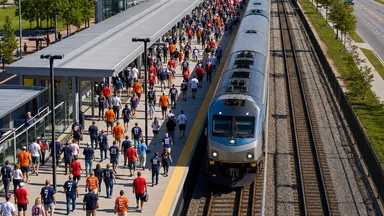
Amtrak serves 10 of the 16 US host cities, but its reliability varies widely. The Northeast Corridor (Boston to Washington) is fast and frequent, but routes in the Midwest and West can be delayed by hours. The California Zephyr, for example, runs daily but often arrives late. For a fan trying to catch a match, a delayed train could mean missing kickoff. Canada's Via Rail connects Vancouver to Toronto in four days—impractical for a tournament. Most fans will rely on buses or flights.
Mexico's ADO bus network is a bright spot. First-class seats between major cities like Mexico City and Guadalajara cost roughly $40 and run multiple times daily. The buses are comfortable, air-conditioned, and generally on time. For shorter hops, like Guadalajara to Monterrey, a bus is often faster than flying when you account for airport security and transfers. However, cross-border bus services are limited. Greyhound discontinued many US routes after the pandemic, and there is no direct bus from the US to Mexico City—you must change at the border.
Rental cars are another option, but a shortage is expected. During the Copa America 2024, rental prices in some US cities tripled. In Canada, the problem was similar. Fans who plan to drive should book as early as possible—ideally as soon as the match schedule is released—and consider using rental aggregators to compare rates. One tip: rent from an airport location, which often has larger fleets, but be prepared for long lines after matches. The biggest risk is traffic; stadiums can cause gridlock for hours. In cities like Los Angeles and Mexico City, it can take two hours to drive 10 miles on match days.
Budgeting for Three Currencies and Tax Regimes
The US dollar is widely accepted in Mexico, especially in tourist areas and border cities, but the exchange rate can be volatile. As of late 2024, one US dollar bought roughly 20 Mexican pesos, but that could shift by 2026. In Canada, the loonie historically trades around 1.35 to the US dollar. Fans should avoid exchanging currency at airports, where rates are poor, and instead use ATMs at local banks. However, ATM fees abroad can reach $5–$7 per withdrawal, so it pays to withdraw larger amounts less frequently. For street food and small purchases, local cash is essential.
Taxes add a significant layer. In the US, sales tax varies by state and city, ranging from 0% in Oregon to over 10% in parts of Washington. Canada applies a 5% Goods and Services Tax (GST) plus provincial sales tax (PST) in some provinces. In Quebec, for example, the combined rate is 14.975%. Mexico has a 16% Value Added Tax (IVA) on most goods and services, and hotels often add a 3% tourism tax. These taxes are usually included in the listed price in Mexico and Canada, but in the US they are added at the register, which can surprise first-time visitors.
A rough estimate for a two-week trip visiting all three host countries, including flights, accommodation, meals, and match tickets, is around $8,000 per person. That figure is highly variable—fans who stay in hostels and eat street food could cut it in half, while those who prefer luxury hotels and fine dining could double it. The key is to budget for each country separately and factor in the cost of internal flights. Many credit cards waive foreign transaction fees, which can save 2–3% on every purchase. Cards like the Chase Sapphire Preferred or Capital One Venture are popular among travelers.
Trade-Offs and Alternatives: Staying in One Country
While the allure of visiting all three host countries is strong, some fans may find the multi-country logistics too complex and opt to stay in one host country. For example, a fan focused on the US could attend matches in New York, Philadelphia, and Atlanta without crossing a border, avoiding visa hassles and time-zone jumps entirely. Similarly, a fan could base themselves in Mexico City and take buses to Guadalajara and Monterrey, enjoying consistent weather and a single currency. This approach simplifies planning and reduces costs, but it means missing out on the unique atmosphere of each host nation. The trade-off is between variety and convenience. As one travel blogger noted, “If you only have two weeks, you might see more football by staying put than by spending half your time in airports.”
Another alternative is to use package tours offered by authorized FIFA resellers. These packages often include match tickets, accommodation, and ground transport, but they come at a premium. For fans who value simplicity over cost, a package can eliminate the need to research visa rules or book flights separately. However, independent planners often find better deals by booking early and using loyalty points. The choice depends on individual priorities: flexibility versus ease, budget versus experience.
Practical Checklist: What Early Planners Are Doing Now
As of early 2025, the most prepared fans are already taking steps. First, they are checking visa requirements for their nationality and applying for US and Canadian visas if needed. The recommended deadline is January 2026, because processing times can stretch. Expedited appointments are available for an extra fee, but availability is limited. Second, they are booking refundable flights and hotels, monitoring for price drops. Many airlines allow free cancellation within 24 hours, and some offer flexible fares for a small premium.
Third, fan forums have become hubs for shared ride and apartment swaps. Websites like Reddit's r/worldcup and dedicated WhatsApp groups help fans coordinate travel and split costs. Fourth, offline maps and translation apps are essential. Google Maps allows offline downloads, and apps like iTranslate or DeepL work without internet. Finally, travel insurance that covers multi-country medical emergencies and trip cancellation is a must. Policies that specifically cover World Cup-related disruptions—like a cancelled match or lost tickets—are available from some providers for roughly $50–$100 for a two-week trip.
One often overlooked detail is the phone plan. Roaming charges across borders can be steep. Fans from the US should check if their carrier includes Canada and Mexico—T-Mobile's Magenta plan does, for example. Others should buy local SIM cards or eSIMs. In Mexico, Telcel offers good coverage; in Canada, Rogers and Bell are reliable. The 2026 World Cup will be a test of logistical endurance as much as football skill. But with early planning, the barriers of three countries, three currencies, and three time zones can be managed.