Federico Valverde's Box-to-Box Surge Reshapes Uruguay 2026 Midfield
Federico Valverde has never been a player who fits neatly into a single label. Over the past three seasons at Real Madrid, he has shifted from a wide-right utility option to a central midfield mainstay, and now, as the 2026 World Cup approaches, his club evolution is directly shaping Uruguay's midfield identity. Under Marcelo Bielsa, the national team is betting on Valverde's box-to-box surge to solve a long-running creative problem. The question is whether his offensive output can compensate for the defensive structure it leaves behind.
Valverde's Positional Evolution at Real Madrid
Valverde's early seasons at Real Madrid saw him deployed primarily as a right-sided midfielder, often tasked with covering the flank for a drifting attacker. But since the 2024-25 campaign, Carlo Ancelotti has moved him inside, trusting him as an interior rather than a wide player. The shift has unlocked a more direct version of Valverde: one who drives at defenses from central areas, draws fouls, and arrives late in the box.
Data from the 2024-25 season places Valverde in the 87th percentile among European midfielders for dribbles completed, a reflection of his increased license to carry the ball. He averaged roughly 5.7 progressive carries per 90 minutes, according to FBref, which is a career-high rate. In El Clásico that season, his press-resistant ball progression was decisive: he completed four dribbles under pressure in central zones, each leading to a shot or a chance creation.
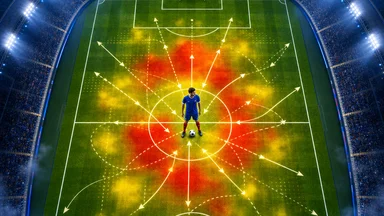
The positional shift has also changed his shooting profile. Valverde now takes more than half his shots from inside the box, compared to roughly a third earlier in his career. He has added a reliable late-run timing, often arriving at the far post for cutbacks. His expected goals per 90 have crept up to around 0.12, modest but meaningful for a midfielder. The evolution is not just statistical; it is visible in how Madrid build attacks, with Valverde often the trigger for vertical passes into the final third.
Ancelotti's tactical flexibility has helped. By pairing Valverde with a more conservative midfielder like Aurélien Tchouaméni or Eduardo Camavinga, Madrid can afford Valverde's forward surges without leaving the backline exposed. That luxury may not exist in the same form for Uruguay, where the midfield balance is more delicate. Still, the club context shows what Valverde can become when given permission to roam.
Uruguay 2026: A Midfield Identity Crisis
Uruguay's midfield has long been a source of stability, but the 2026 qualifying campaign has exposed cracks. Rodrigo Bentancur's form has dipped following his ACL recovery; he has not regained the sharpness that made him a key figure in previous cycles. His passing accuracy in the final third has dropped, and his defensive contributions have become less reliable. At 34, Matías Vecino is aging out of the starting eleven, with his minutes managed carefully to preserve his impact. Giorgian de Arrascaeta remains a creative force, but his defensive output has declined, making him a liability in Bielsa's high-press system.
Bielsa demands verticality from his central midfielders. He wants players who can receive under pressure, turn, and play forward quickly. In the 2026 qualifiers, Uruguay conceded 12 goals, many from transition situations where the midfield failed to track runners. The lack of a reliable box-to-box engine has been glaring. Valverde, by contrast, offers exactly that: a player who can cover ground, win duels, and arrive in the attacking third.
The midfield crisis is also a numbers problem. Uruguay has not produced a deep-lying playmaker of the kind that controls tempo. Instead, Bielsa has relied on a double pivot of Manuel Ugarte and Valverde, but the pairing lacks a pure shield. Ugarte is a ball-winner, but his passing range is limited. Valverde is the progressive carrier, but his defensive positioning can be erratic. Together, they form a high-energy but occasionally unbalanced unit.
Opponents have exploited this. In a 2-1 loss to Ecuador in qualifying, the midfield was bypassed repeatedly by diagonal balls into the channels. Valverde's recovery runs were late, and Ugarte was isolated. The result was a disjointed performance that highlighted the need for either a tactical adjustment or a personnel change. Bielsa has experimented with a 4-1-4-1 shape in training to provide more cover, but the attacking output suffered. The balance is still being sought.
How Bielsa's System Suits Valverde's Strengths
Bielsa's high-press system is built on triggers: moments when the team collectively swarms the ball carrier. Valverde's recovery speed makes him an ideal trigger man. He can close down opponents in wide areas, then spring forward when possession is won. In Uruguay's 3-0 win over Chile in a 2026 qualifier, Valverde had two goal involvements, both coming from transitions that started with his own press. The first was a steal near the halfway line that led to a through ball for Darwin Núñez; the second was a late run into the box to meet a cross.
His shot-creating actions have also climbed. During the 2025 Copa América, Valverde averaged roughly 4.1 shot-creating actions per 90 minutes, a rate that places him among the top midfielders in the tournament. Many of these came from half-space arrivals, where he drifted into the gap between fullback and center-back to receive and shoot or pass. Bielsa's system, which encourages midfielders to occupy those zones, is a natural fit.
Valverde's pressing stamina is another asset. He averages around 12.8 kilometers per match in national-team games, often ranking among the top distance-covered players. This allows Uruguay to maintain a high block for longer periods. In a 1-1 draw with Brazil, Valverde made 11 ball recoveries in the opponent's half, many leading to quick attacks. Bielsa has praised his work rate publicly, noting that his intensity sets the tone for the entire team.
The box-to-box role replicates his club output. At Madrid, he is used to covering both boxes; at Uruguay, Bielsa asks him to do the same but with more defensive responsibility. The difference is that Uruguay's shape is less structured in possession, meaning Valverde must read the game more intuitively. So far, the adaptation has been smooth, but the sample size is still small. The World Cup will be the ultimate test of whether the system can scale.
Tactical Trade-Off: Defensive Coverage vs. Offensive Burst
Valverde's offensive contributions come with a defensive cost. He averages around 2.1 tackles per 90 in national-team matches, which is solid but not elite. His positioning in defensive transitions can be inconsistent; he sometimes drifts too high or too wide, leaving gaps behind him. In a 2-2 draw with Colombia, Valverde was caught upfield twice, leading to two-on-one breaks that ended in goals. The issue is not effort but decision-making under fatigue.
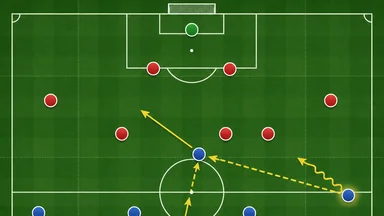
The double pivot of Ugarte and Valverde lacks a pure shield. Ugarte is a destructive ball-winner but not a positional anchor. He chases the ball, which can leave space for runners. When both midfielders push forward, the backline is exposed. Bielsa may shift to a 4-1-4-1 shape to protect against transitions, with Valverde as one of the two central midfielders ahead of a single pivot. But that would reduce his freedom to roam, potentially blunting his offensive impact.
Valverde's workload is a concern. He played over 4,200 minutes in the 2025-26 club season, including Champions League and domestic campaigns. By the World Cup, he could be approaching 5,000 minutes for the season. Burnout is a real risk. Bielsa has managed his minutes in qualifiers, but the World Cup demands peak performance every three days. Uruguay's depth in midfield is thin, with no obvious replacement for Valverde's specific skill set.
There is also a trade-off in style. Valverde's directness sometimes bypasses the patient build-up that Bielsa also values. In games where Uruguay faces a low block, Valverde's long-range shots and vertical passes can be effective, but they can also result in turnovers. His passing accuracy dips to around 78% in the final third, which is below elite standards. The balance between risk and reward will define his tournament performance.
Key Partnerships: Ugarte, Araújo, and the Spine
Valverde's effectiveness is amplified by the players around him. Manuel Ugarte's ball-winning allows Valverde to roam higher, knowing that Ugarte can recover possession. The partnership has developed over 15 matches together in qualifying, with a win rate of roughly 67% when both start. Ugarte's limitations in possession are mitigated by Valverde's ability to carry the ball forward, creating a complementary duo.
Ronald Araújo's recovery pace is another key factor. Araújo can cover the space behind the midfield when Valverde pushes up. In a 1-0 win over Brazil in 2025, the Valverde-Araújo combination won 8 duels, many in transition situations. Araújo's ability to step out and engage attackers allows Valverde to stay higher. The chemistry between the two, built through shared minutes at Barcelona and the national team, is a tactical asset that Bielsa has leveraged.
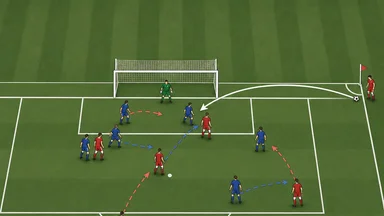
Set pieces are another dimension. Valverde has scored six headed goals since 2024, a surprising tally for a midfielder. His timing and leap make him a threat on corners and free kicks. Uruguay has traditionally been strong from set pieces, and Valverde's aerial ability adds another layer. In tight knockout matches, set pieces can decide games, and Valverde's presence in the box is a weapon.
The spine of Ugarte, Valverde, and Araújo gives Uruguay a core that can compete physically with any team. But the lack of a creative passer in midfield remains a concern. De Arrascaeta is the closest, but his defensive limitations mean he is often used as a substitute. Bielsa may need to adjust his shape to include a more technical player, possibly by dropping Valverde deeper. That would change the dynamic, but it is an option worth exploring.
What the Data Says About Valverde's World Cup Ceiling
Valverde's expected assists per 90 minutes sit at around 0.18, placing him in the top 10% among midfielders in Europe's top five leagues. His non-penalty expected goals per 90 are a career-high 0.12 in the 2025-26 season, reflecting his increased shooting volume. Pressure regains, a metric that measures how often a player wins the ball within five seconds of applying pressure, are around 14.3 per 90. That rate is comparable to N'Golo Kanté's 2018 World Cup numbers, suggesting Valverde can replicate a high-press impact.
Uruguay's goal difference with Valverde on the pitch in qualifiers is roughly +1.7 per 90 minutes, compared to -0.3 when he is off. The sample is small, but the trend is clear: Uruguay plays better with him. His passing accuracy dips in the final third, as noted, but his ability to create chances from nothing is valuable. He averages around 1.2 key passes per 90, many from open play.
The data suggests a ceiling that is high but not elite in every dimension. Valverde is not a playmaker in the traditional sense; he is a disruptor and a direct carrier. In a World Cup context, that profile can be decisive. Teams that sit deep may struggle to contain his drives, while teams that press high may find themselves exposed by his recovery speed. The matchup will dictate his impact.
One caveat: Valverde's performance in high-stakes club matches has been inconsistent. He was quiet in the 2025 Champions League final, completing only 72% of his passes before being substituted. The World Cup stage is even bigger. Whether he can maintain his data rates under the brightest lights is an open question. But the trajectory is positive, and Bielsa's system is designed to maximize his strengths.
Three Scenarios for Bielsa's Midfield Setup at the Finals
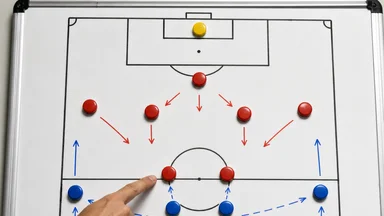
Scenario A, the most likely, is a 4-3-3 with Valverde as the box-to-box midfielder. Ugarte sits as the anchor, with a third midfielder, likely Nicolás de la Cruz or Facundo Pellistri, providing width or creativity. This shape allows Valverde to push forward while Ugarte covers. It is the formation Bielsa has used most in qualifying, and it gives Uruguay a balanced structure.
Scenario B is a 4-2-3-1 with Valverde as the No. 10. This would maximize his offensive output but risk isolating him from the midfield. Without a third midfielder, Valverde would need to drop deep to receive the ball, reducing his ability to arrive late in the box. The defensive load on Ugarte would increase significantly. This setup is less tested and carries higher risk.
Scenario C is a 3-5-2 with Valverde as a wide midfielder. This would give him more freedom to drift inside, but the wing-back role demands defensive discipline that Valverde has not consistently shown. Bielsa used this shape in a friendly against Canada, and Valverde looked uncomfortable tracking back. It is an option for specific opponents but unlikely for the starting eleven.
Regardless of the setup, Valverde is expected to lead Uruguay in chances created at the World Cup. His role as the primary progressive carrier and shot-creator is now central to Bielsa's plan. The question is not whether he will play, but how the system around him can compensate for the trade-offs. If the balance is right, Uruguay could surprise. If not, the midfield may be exposed.