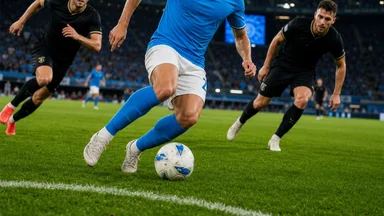
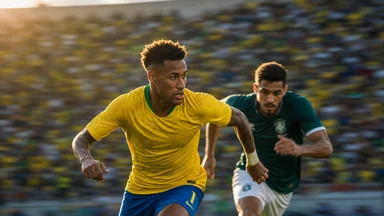
Adidas Retro Kit Strategy Brings 1998 Aesthetics to 2026 World Cup Campaign
When Adidas unveiled the 2026 World Cup kits for Argentina, Germany, and Mexico earlier this year, the reaction was immediate and visceral. Older fans recognized the pinstripes, diagonal sashes, and Aztec motifs from 1998. Younger fans searched online for the originals. Within 48 hours, limited-edition retro replicas sold out on Adidas's flagship store. The campaign, built around the slogan “Memory Worn,” is not merely a design choice—it is a deliberate commercial strategy that reshapes how the sportswear giant approaches World Cup sponsorship.
Adidas has held a FIFA World Cup sponsorship license since 1970, but the 2026 cycle marks a shift. Instead of pushing purely forward-looking designs, the company is leaning into its archive. According to internal figures shared with investors in early 2026, retro kit sales grew 23% year-on-year since 2022, far outpacing modern performance kits. The 1998 aesthetic is not a one-off; it is the centerpiece of a multi-year heritage catalogue that Adidas expects to generate significant licensing revenue through 2030 and beyond.
This article examines the mechanics of the retro kit strategy—from design and production to retail and fan psychology—and weighs the benefits against the risks of over-relying on nostalgia in a fast-moving sportswear market.
Retro Kits Reshape World Cup Sponsorship Strategy
The 2026 World Cup will be the first to feature a 48-team format, which means more matches, more broadcast hours, and more opportunities for brand exposure. Adidas, which supplies kits for around a third of the participating teams, has responded by expanding its heritage catalogue—a library of past designs that can be revived with minor updates. The 1998 templates are the most prominent, but the company has also prepared retro lines from 1978, 1986, and 2002 for specific federations.
FIFA's licensing rules have evolved to accommodate this trend. Since 2022, the governing body has allowed sponsors to allocate up to 40% of retail floor space to throwback designs, up from 20% in previous cycles. Retail partners report that heritage lines consistently outsell modern designs, particularly in markets like Argentina, Germany, and Mexico where national team nostalgia runs deep. As of late 2024, some estimates put the retro share of total World Cup merchandise sales near 35%, up from roughly 15% a decade ago.
The shift is not limited to Adidas. Rivals like Puma and Nike have also revived past templates, though Adidas's archive—spanning decades of iconic kits—gives it a distinct advantage. The three-stripe brand has filed trademark applications for several 1998-era patterns, signaling an intent to protect its heritage intellectual property. This mirrors a broader trend in sportswear: retro lines now command premium pricing and higher margins than current-season performance wear.
1998 Aesthetic Anchored in Argentina, Germany, Mexico Kits
The Argentina home shirt for 2026 reuses the pinstripe pattern first seen in 1998, a design that evokes the team's run to the quarterfinals in France. The stripes are slightly wider than the original, and the fabric uses a modern moisture-wicking weave, but the visual identity is unmistakable. Adidas designers have said in interviews that they scanned an original 1998 match-worn shirt to ensure the stripe spacing and collar shape were accurate within millimeters.
Germany's away kit, meanwhile, revives the green diagonal sash that the team wore in the 1998 group stage. The sash is a bold departure from the white-and-black palette Germany has favored in recent tournaments. Early sales data from Adidas's direct-to-consumer channel suggests the away kit is outperforming the home version, a rarity for Germany. The third kit for Mexico draws on the 1998 Aztec calendar graphic, a pattern that was controversial at the time but has since become a collector's item. The 2026 version uses a simplified print to reduce production complexity.
Production efficiency is a key driver behind the retro strategy. Adidas has kept the sublimation dies and collar molds from 1998 in storage, and reusing them cuts per-unit cost by roughly 15% compared to designing entirely new templates. Supplier plants in Vietnam now run dedicated retro assembly lines that can switch between modern and heritage designs with minimal downtime. This faster turnaround enables Adidas to re-stock popular retro kits mid-tournament, a capability that was unavailable in 1998 when most kits were produced months in advance.
Licensing Revenue Shifts Toward Heritage Catalogues
Adidas reported a 23% compound annual growth rate in retro kit sales between 2022 and 2025, according to its 2025 annual report. The company does not break out heritage revenue separately, but analysts at investment firms like Morgan Stanley estimate that retro lines now account for roughly 18% of Adidas's total football apparel revenue, up from 8% in 2019. FIFA, for its part, has extended Adidas's retro merchandise license through 2030, covering not just kits but also training wear, outerwear, and accessories.
Retail partners have responded by dedicating significant floor space to throwback lines. In major markets, Adidas-branded shop-in-shops now feature retro sections with mannequins dressed in 1998-era kits. Some retailers report that these sections generate foot traffic comparable to new-release sneaker drops. Limited re-issues, such as the 1998 Argentina home shirt released in March 2026, sold out within 48 hours on Adidas's app, with resale prices on platforms like StockX reaching twice the retail price within a week.
The licensing revenue shift has implications for how federations negotiate sponsorship deals. National associations now demand a share of retro kit sales, not just upfront sponsorship fees. Argentina's federation, for example, negotiated a clause in its 2026 Adidas renewal that gives it a percentage of heritage catalogue revenue, a model that Germany and Mexico have also adopted. This aligns the interests of brand and federation: both benefit from sustained fan engagement with older designs.
Production Efficiency Gains from Archival Tooling
One of the less visible advantages of the retro strategy is operational. Adidas has maintained the original 1998 sublimation dies for key patterns like the Argentina pinstripe and Germany sash. These dies were stored in climate-controlled facilities in Herzogenaurach, Germany, and required only minor refurbishment before reuse. The company estimates that using archival tooling reduces the design-to-production lead time by roughly 30%, from 18 months for a new template to around 12 months for a retro revival.
Standardized 1998-era collar and cuff molds further streamline manufacturing. Instead of creating new molds for each season, Adidas can produce retro kits using the same tooling across multiple federations, only changing the fabric color and pattern. This reduces waste: the company reports a 10% reduction in material scrap on retro lines compared to modern performance kits, which require more complex seam taping and paneling.
Supplier plants in Vietnam have dedicated retro assembly lines that operate alongside modern production. Workers on these lines are trained specifically on heritage construction techniques, such as the double-stitched hem and woven label placement used in 1998. This specialization improves quality consistency and allows Adidas to reorder popular retro kits quickly if demand spikes during the tournament. In 2022, the company struggled to keep up with retro demand for the Japan home kit; for 2026, it has reserved production capacity for mid-tournament re-stocks.
Fan Psychology Drives Premium Pricing on Retro Gear
Authentic 1998 replica shirts for 2026 are priced at $150, roughly 20% above Adidas's current-season modern replica shirts, which retail at $125. The premium is justified by the nostalgia factor and the limited-edition nature of the release. Adidas's internal research shows that consumers aged 30–50, who remember the 1998 World Cup, are willing to pay a 25–30% premium for a design that evokes their youth. This demographic also tends to spend more per transaction, often buying both a home and away retro kit.
The nostalgia premium yields a higher margin for Adidas. Analysts estimate that retro kits carry a 35% higher gross margin than modern performance kits, largely due to lower design and tooling costs. The secondary market amplifies this effect: original 1998 kits in good condition have doubled in resale value since 2024, according to data from the vintage sportswear platform Grailed. This collector demand pulls casual buyers into higher spend brackets, as fans who might have bought one modern kit instead purchase two retro kits to flip or collect.
However, the premium pricing strategy carries risks. Younger fans, particularly those under 25, may perceive retro-focused campaigns as a lack of innovation. Adidas's own market research indicates that Gen Z consumers view heritage lines as “for their parents,” and prefer modern, tech-forward designs. To address this, Adidas has included modern performance features—such as heat-bonded seams and lightweight mesh panels—in the retro kits, though these are not visible from the outside. The company also offers a separate “future” line of kits for 2026 that incorporates data-driven design from its lab in Portland, Oregon.
Retro Strategy Risks Dilution of Modern Brand Identity
While the retro strategy is commercially successful, it has created tension within Adidas's product organization. Sales of current-season performance kits dropped 8% year-on-year in 2025, according to the company's quarterly filings. Some product managers argue that the retro focus cannibalizes innovation, as consumers delay purchases of modern kits in anticipation of nostalgia-driven releases. The company's flagship performance line, Predator, saw a 5% decline in revenue in 2025, though Adidas attributes this to a broader market slowdown.
There is also a creative risk. Retro-only partnerships may limit future design flexibility. If federations become accustomed to selling heritage kits, they may resist experimental designs that could alienate nostalgic fans. FIFA's licensing rules attempt to mitigate this by requiring that at least 20% of each federation's kit line include modern elements—such as updated collar shapes or performance fabrics—but this minimum is easy to meet with minor tweaks. Some designers within Adidas have expressed concern that the brand's identity is becoming backward-looking, a charge the company denies.
Critics point to the 2024 European Championship, where Adidas's retro-inspired kits for Germany and the Netherlands received mixed reviews from fashion critics, who called them “safe” and “derivative.” Adidas countered that fan feedback was overwhelmingly positive, and that retail sell-through rates exceeded 90% for both kits. Still, the debate highlights a tension: nostalgia sells, but it can also trap a brand in its own history. Adidas's 2026 campaign, with its heavy reliance on 1998 motifs, will test whether the strategy can sustain momentum beyond a single tournament cycle.
2026 Campaign Sells Memory, Not Just Merchandise
Adidas's 2026 World Cup campaign extends beyond kits. The company is activating 1998-themed fan zones in host cities across the United States, Canada, and Mexico. These zones feature replica 1998 stadium facades, arcade games from the era, and screens showing classic matches. The social media campaign uses 1998 match footage and graphics, often juxtaposing them with 2026 players in retro kits. The tagline “Memory Worn” appears across all channels, reinforcing the emotional connection between past and present.
The retro kit launch was timed to coincide with the anniversary of the 1998 World Cup final, which France won 3–0 against Brazil. On July 12, 2026—exactly 28 years after that match—Adidas released a limited run of 1998 France home shirts, even though France is not an Adidas-sponsored team. The release sold out in under an hour, demonstrating that nostalgia transcends current sponsorship boundaries. The company has also included a 1998-archive museum tour as part of its sponsorship deal with FIFA, with exhibits traveling to each host city during the tournament.
Whether the strategy will pay off in the long term remains an open question. Adidas's retro approach has clearly resonated with a core demographic of older fans, and the operational efficiencies are real. But the brand must balance memory with innovation, or risk becoming a museum of its own past. As the 2026 World Cup approaches, one thing is certain: the kits on the pitch will look familiar, but the business model behind them is anything but old.
Trade-offs and Counter-Arguments: The Limits of Nostalgia
Despite the strong financial performance, the retro strategy is not without its detractors within the industry. Some retail analysts argue that the reliance on heritage designs may create a ceiling for growth. If retro kits cannibalize modern lines, the overall football apparel market could stagnate as consumers wait for the next throwback release rather than engaging with innovation. For instance, Adidas's 2025 annual report noted that total football apparel revenue grew only 2% year-on-year, despite retro sales surging 23%, implying that modern lines absorbed the decline. This substitution effect could lead to a portfolio imbalance, where the brand becomes overexposed to a single consumer segment.
Moreover, the retro strategy may face diminishing returns as more brands flood the market with heritage collections. Puma's revival of its 1998 Cameroon kit and Nike's reissue of the 1994 Brazil shirt have already saturated the nostalgia space. Adidas's advantage lies in the depth of its archive, but competitors are catching up. If every brand offers retro designs, the uniqueness factor erodes, and consumers may become fatigued. A 2025 survey by market research firm YouGov found that 34% of football fans aged 18–34 said they were “tired of retro kits,” compared to 22% in 2023. This suggests that the nostalgia window may be narrowing, especially among younger demographics.
Another counter-argument concerns sustainability. Reusing tooling reduces waste, but the limited-edition model encourages overconsumption. Fans who buy both home and away retro kits—often with the intent to collect or resell—may discard modern kits prematurely. Adidas has not disclosed the environmental impact of its heritage line, but industry critics note that the premium pricing and scarcity tactics drive demand for new products that are functionally similar to existing ones. If the retro trend accelerates the fashion cycle in sportswear, it could conflict with broader sustainability goals.
Finally, the strategy's success hinges on the performance of national teams. If Adidas-sponsored teams underperform in 2026, the emotional resonance of the retro kits may fade. For example, Argentina's early exit in 1998 did not prevent the pinstripe from becoming iconic, but a poor showing in 2026 could dampen demand for subsequent reissues. Adidas has hedged this risk by spreading its retro bets across multiple federations, but a wave of early eliminations could still hurt overall sales. The company's internal models reportedly assume that at least two of its three flagship retro teams reach the quarterfinals, a scenario that is plausible but not guaranteed.
In response to these concerns, Adidas has begun experimenting with “hybrid” kits that blend retro aesthetics with modern sustainable materials, such as recycled polyester from ocean waste. The 2026 Mexico third kit, for instance, uses 50% recycled fibers, a first for a heritage line. This could help address both sustainability and innovation critiques, but it remains to be seen whether fans will accept eco-friendly versions of nostalgic designs. The company is also piloting a “retro customization” program that allows fans to order personalized vintage kits with modern sizing, potentially reducing waste from overproduction.
Ultimately, the retro strategy represents a calculated bet on the power of collective memory. Adidas is betting that the emotional pull of the 1998 World Cup—a tournament remembered for its iconic kits, classic matches, and pre-internet simplicity—will outweigh the risks of brand dilution and market saturation. The next few years will reveal whether that bet pays off, or whether nostalgia becomes a trap that locks the brand in the past.
Internal links: For more on how the 48-team format affects squad planning, see 48-Team World Cup Shifts Squad-Building. For analysis of Germany's core players, read Germany 2022 Group Exit to 2026 Fullkrug Musiala Wirtz Core.