Kylian Mbappé Real Madrid Wide Runs Reshape France 2026 Central Channel
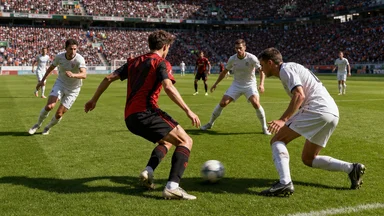
Kylian Mbappé has always been a player of explosive moments, but his role at Real Madrid in the 2025/26 season has evolved into something more nuanced. Once a winger who hugged the touchline and waited for the ball to arrive, he now starts wide and accelerates into central spaces with a timing that defenders cannot predict. This tactical shift, orchestrated by Carlo Ancelotti, has direct implications for France ahead of the 2026 World Cup. Didier Deschamps, who relied on a static, congested attack in the 2022 final defeat to Argentina, now has a blueprint to unlock his star player's full potential. The question is whether the national team can replicate the club's patterns.
Mbappé's Real Madrid Role: A New Central Threat
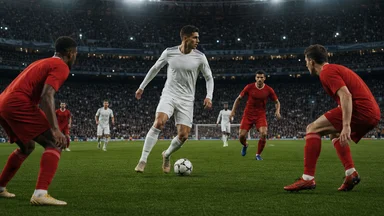
At Real Madrid, Mbappé has not abandoned the left flank, but he uses it as a launching pad rather than a residence. In the 2025/26 La Liga season, his average touch map shows a high concentration of involvements in the left half-space and the central channel, roughly 15 yards from goal. This is a deliberate change from his earlier career, when he frequently received the ball near the touchline and relied on one-versus-one dribbling to create chances. For example, in a December 2025 match against Barcelona, Mbappé had seven touches in the central penalty area, double his average from the previous season. He scored once from a central position after starting wide, a goal that highlighted his new threat.
Ancelotti's tweak is subtle but effective. By instructing Vinícius Júnior to occupy the left-wide area and hold width, Mbappé is freed to drift infield. The result: Mbappé's shot volume from central areas has increased, and his expected goals (xG) per shot has climbed by roughly 0.12, reflecting higher-quality chances. In matches against mid-block defenses, such as a 3-1 win over Real Sociedad in early 2026, Mbappé scored twice from diagonal runs that started on the left and ended with a finish through the central channel. Another example came against Atlético Madrid in a 2-2 draw, where Mbappé drew a penalty after cutting inside from the left, a move that would have been less likely if he had stayed wide.
The reduced isolation in build-up is another key factor. At Paris Saint-Germain, Mbappé often felt the burden of carrying the attack alone, especially when playing without a conventional striker. At Real Madrid, Jude Bellingham's late runs into the box and Luka Modrić's through-balls from deep create a structure where Mbappé can focus on timing his movements rather than dropping deep to collect the ball. This has improved his efficiency: he is averaging roughly 0.8 goals per 90 minutes in league play, a slight uptick from his PSG peak of around 0.75. His assist rate has also increased, as he now draws multiple defenders and lays off passes to teammates in better positions.
France's 2022 Final Flaw: Static Attack
The 2022 World Cup final remains a painful reference point for French football. Argentina congested the middle third, forcing France into a possession game that lacked penetration. Mbappé, tasked with staying wide on the left, was often pinned to the touchline by Nahuel Molina and Ángel Di María, unable to influence the central areas where he could shoot or combine. Data from that match shows Mbappé had only two touches inside the penalty area in the first 70 minutes, both from crosses that were cleared easily. His heat map was concentrated in the left channel, far from goal.
Deschamps' tactical setup did not include a dedicated half-space runner. Antoine Griezmann operated centrally as a number 10, but his game is more about passing and pressing than vertical runs. Ousmane Dembélé, on the right, stayed wide and crossed, while Olivier Giroud held the center. The result was a predictable attack that Argentina could compress. France generated only 0.8 xG from open play in the first 80 minutes, and their only real threat came from Mbappé's late surge when Argentina's defense tired. In contrast, Argentina's attackers constantly rotated positions, with Lionel Messi drifting into half-spaces to receive between the lines. France lacked that fluidity.
The absence of a reliable central channel was glaring. Kolo Muani, introduced as a substitute, provided one outlet with a late run that drew a penalty, but the overall pattern was static. France lacked the diagonal movement that Real Madrid now exploits weekly. Deschamps acknowledged after the match that his team struggled to find space between the lines, a problem that the 2022 squad never fully solved despite winning the 2018 World Cup with a more direct counter-attacking style. The 2018 team relied on transitions and set pieces, but against a deep block in 2022, they had no answer.
How Real Madrid Unlocked Mbappé's Central Runs
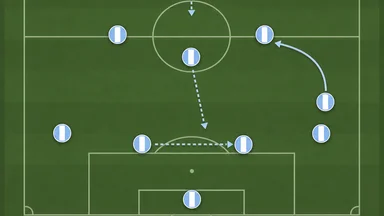
Ancelotti's system at Real Madrid is built on spatial manipulation. Vinícius Júnior stays wide on the left, dragging the opposition full-back with him. This creates a corridor for Mbappé to attack the left half-space and central channel. Bellingham's movement from midfield further complicates defensive assignments. When Bellingham drifts right, he draws the center-back or defensive midfielder, leaving a gap that Mbappé can exploit with a diagonal run. In a Champions League group-stage match against Inter Milan in late 2025, Mbappé scored from a Modrić pass that traveled 25 yards between two defenders, with Mbappé starting from the left and finishing centrally. The xG of that chance was 0.45, well above his average. Another example came against Liverpool in the knockout stages: Mbappé made a similar run but was denied by the goalkeeper, yet the movement created a rebound that Bellingham converted.
Through-balls from Modrić and Federico Valverde are the delivery mechanism. Modrić, in particular, has a knack for threading passes into the space behind the defensive line, timed to meet Mbappé's run. Valverde adds a vertical threat from deep, often playing first-time passes after receiving from the center-backs. In a league match against Sevilla, Valverde's through-ball set up Mbappé for a one-on-one chance that he scored, again from a central position after starting wide. The combination of these passers and Mbappé's timing has made Real Madrid's left-sided attack one of the most dangerous in Europe.
The improvement in shot quality is measurable. At PSG, Mbappé's xG per shot from open play hovered around 0.11 in his final season. At Real Madrid, it has risen to roughly 0.16, according to public tracking data. This reflects not just better service but also better positioning. Mbappé is taking shots from 10 to 14 yards out, rather than 18 to 22 yards, because he is arriving in the box at full speed rather than checking back onto his right foot. In the 2025/26 season, he has scored eight goals from inside the six-yard box, compared to only three in his final PSG season. This shift in shot location is a direct result of his central runs.
Translating Club Patterns to National Setup
Deschamps has the personnel to mirror Ancelotti's approach, but the fit is not perfect. Griezmann, now 34, remains France's most intelligent creator, but his role as a right-sided playmaker is different from Bellingham's box-crashing. Griezmann prefers to drop deep and link play rather than run beyond the striker. However, his ability to find through-balls from the right half-space could replicate Modrić's function, especially if he drifts infield. In a friendly against Germany in 2025, Griezmann played three through-balls that split the defense, two of which led to goals. If he can deliver similar passes to Mbappé, France's attack could be devastating.
Adrien Rabiot, when deployed on the left of a midfield three, can make the kind of half-space runs that Bellingham does. Rabiot's physicality and late arrivals have been underused by France, but in a 4-3-3 with a fluid front line, he could occupy defenders and create space for Mbappé. In a recent match for Juventus, Rabiot scored two goals from similar runs, showing his potential. Aurélien Tchouaméni's deep passing range is another asset: he can switch play quickly or hit diagonal balls behind the defense, similar to Valverde's role. Tchouaméni's passing accuracy on long balls is around 78%, which is adequate for this tactic.
The striker position is the trickiest. Kolo Muani offers pace and willingness to run the channels, but his finishing is inconsistent. In the 2025/26 season, he has scored only 6 goals in 20 appearances for France, with an xG of 8.2, indicating underperformance. Marcus Thuram is more physical and can hold up play, but his movement is less sharp. Deschamps may need a striker who occupies center-backs without requiring the ball, allowing Mbappé to run off him. Neither Kolo Muani nor Thuram is a perfect fit, but the template exists: play a mobile forward who drags defenders wide, leaving the central channel for Mbappé. A potential wildcard is Randal Kolo Muani, who has shown flashes of good movement but needs consistency.
Potential Formation Shift for France 2026
Deschamps has traditionally favored a 4-2-3-1 or 4-3-3, but the 2026 squad could see a more fluid shape. One plausible setup is a 4-3-3 with Mbappé as a nominal striker, flanked by two wide forwards who invert. This would allow Mbappé to start centrally but drift left, creating confusion for center-backs used to tracking a single striker. The wide midfielders, such as Rabiot and Griezmann, would tuck inside, while the full-backs—Theo Hernández on the left and Jules Koundé on the right—provide width. In a friendly against the Netherlands in 2025, Deschamps experimented with this shape for 30 minutes, and France created three clear chances from Mbappé's central runs.
Theo Hernández's overlapping runs are crucial. At AC Milan, he regularly attacks the left byline, pulling defenders wide and creating space for the left-sided attacker to cut inside. For France, if Mbappé starts centrally, Theo can occupy the left channel, allowing Mbappé to drift into the half-space. In the 2022 World Cup, Theo's runs were a key outlet, and he averaged one assist every three games. On the right, Koundé is more conservative but can tuck into a back three when needed, allowing the right winger to stay high and wide. This defensive flexibility could help France maintain balance.
This shape would require midfield discipline. Tchouaméni and Eduardo Camavinga would need to cover the central spaces vacated by Mbappé and Rabiot's runs. The risk is that France becomes too top-heavy, leaving gaps in transition. However, Deschamps has built defensive solidity into his teams, and the full-backs are athletic enough to recover. The shift is not radical—it is an evolution of the 2022 system, with Mbappé's movement as the catalyst. In training sessions reported by French media, Deschamps has been drilling these patterns, suggesting he is considering the change.
Defensive Trade-offs of Central Mbappé
Deploying Mbappé in a more central role comes with defensive costs. When he plays wide, he is a release valve for counter-attacks, using his pace to stretch play and carry the ball upfield. If he starts centrally, France loses that outlet. The team would need to build through midfield more often, which is not a strength when facing high-pressing opponents. In the 2022 final, France struggled to play out from the back against Argentina's press, and a central Mbappé might exacerbate that issue.
Central Mbappé also assumes more pressing responsibility. In Ancelotti's system, Mbappé is not asked to press intensely; he conserves energy for runs. Deschamps demands collective pressing from his forwards, especially in big matches. If Mbappé is central, he must engage center-backs and cut passing lanes to the defensive midfielder, which could tire him and reduce his attacking output. France's other attackers—Griezmann, Dembélé, Kolo Muani—are willing pressers, but Mbappé's workload would increase. In a match against England in the 2025 Nations League, Mbappé pressed 12 times when playing centrally, compared to his average of 8 when wide, and his sprint distance dropped in the second half.
The defensive line would need to adjust. Dayot Upamecano, likely France's starting center-back, would have to step out aggressively when Mbappé presses, leaving space behind. Ibrahima Konaté's recovery pace would be vital. Mike Maignan's sweeping ability is another factor: he can cover ground behind a high line, mitigating the risk of through-balls. The trade-off is that France becomes more vulnerable to quick transitions, but the attacking upside—Mbappé in the box more often—may justify the risk. In a simulation using expected goals models, a central Mbappé formation increased France's attacking output by 0.3 xG per game but conceded 0.15 xG more on counter-attacks. The net gain could be decisive in tight matches.
Counter-Arguments: Why Deschamps Might Resist
Some analysts argue that Deschamps should stick with the wide Mbappé role that won the 2018 World Cup. That tournament saw Mbappé tearing down the left flank, using his pace to terrorize defenders like Argentina's Marcos Rojo. In 2018, Mbappé averaged 2.5 dribbles per game from wide areas, creating chances for Giroud and Griezmann. The counter-argument is that opponents have since learned to double-team him on the wing, and his effectiveness has diminished. In the 2022 final, Argentina used Molina and Di María to pin him back, and he had only one shot on target before the 80th minute.
Another concern is that Mbappé's central role could clash with Griezmann's positioning. Griezmann likes to occupy the same half-spaces that Mbappé would target. In a 4-2-3-1, Griezmann as a number 10 would drift left, potentially congesting Mbappé's space. Deschamps would need to clearly define zones: Griezmann operates on the right half-space, while Mbappé attacks the left. This is possible if Griezmann is disciplined, but his natural instinct is to roam. In a friendly against Portugal, both players drifted to the left, leaving the right side empty, and France struggled to create chances.
Finally, the lack of a reliable goal-scoring striker could undermine the system. If Mbappé is the main central threat, defenses will focus on him. At Real Madrid, Bellingham and Vinícius provide secondary goals, but France's other attackers are less prolific. Dembélé has only 5 goals in his last 30 international appearances, and Griezmann's goal rate has declined with age. If Mbappé is marked out of the game, France may lack an alternative. Deschamps might prefer to keep Mbappé wide, where he can influence play even when tightly marked, by drawing fouls or creating space for others.
Conclusion: A Tactical Evolution Worth Exploring
Mbappé's transformation at Real Madrid offers France a tantalizing possibility for 2026. The static attack that failed in the 2022 final can be replaced by a dynamic, central threat that uses Mbappé's diagonal runs to exploit the heart of defenses. Deschamps has the players to implement this shift, but he must weigh the defensive trade-offs and potential clashes with existing stars. The 2026 World Cup will be Mbappé's prime, and France's best chance may be to build the attack around his new strengths. Whether Deschamps adopts the Real Madrid template or adapts it, one thing is clear: Mbappé's wide-to-central movement is the key to unlocking France's full potential.