Semi-Automated Offside and Sensor-Embedded Balls Redefine 2026 Match Control
The 2026 FIFA World Cup will mark a quiet but significant shift in how matches are officiated. After years of debate over marginal offside calls and lengthy VAR reviews, FIFA has locked in a set of technology-driven rule changes that aim to make decisions faster, more consistent, and less open to interpretation. The centerpieces are semi-automated offside technology (SAOT) and a sensor-embedded match ball that transmits position data in real time. These tools, approved by IFAB for tournament debut, promise to reduce the average review time from roughly 12 seconds to under five, according to FIFA's own targets. But the changes also raise questions about edge cases, human oversight, and how teams will adapt tactically.
The 2026 Referee-Tech Overhaul: From Disputed Calls to Data-Driven Certainty
The 2026 overhaul is not a single gadget but a layered system. Semi-automated offside technology ends the freeze-frame debate by using 12 tracking cameras to capture 29 body landmarks per player at 50 Hz. An AI model generates an offside line in under a second, and an alert is sent to the VAR if an attacker's limb is beyond the second-to-last defender. The system also integrates data from the match ball, which contains an inertial measurement unit (IMU) that detects the exact moment of contact. This ball-touch trigger replaces the subjective video-frame selection that has caused controversy in previous tournaments.
The sensor-embedded ball—Adidas's Oceaunz model for 2026—transmits 50 Hz position data to an edge server near the pitch. Goal-line technology, previously reliant on camera-only systems, is upgraded to fuse ball-sensor and camera data, reducing the chance of occlusion errors. IFAB approved the full package in early 2025, and FIFA confirmed it will be used across all 104 matches of the expanded 48-team tournament.
Critics point out that the system is only as good as its calibration. During the FIFA Club World Cup 2025 trial, the offside accuracy reached roughly 97 percent, but false positives occurred during tightly bunched goalmouth scrambles where multiple players overlapped. The sensor ball itself failed once when kicked directly into a post, causing a brief data gap. FIFA's technical team says these incidents are within acceptable margins and that the system will be refined before the tournament. However, independent analysts argue that a 3 percent error rate in a 64-match knockout phase could still affect crucial decisions. For example, in a tight round-of-16 tie, a false positive that disallows a legitimate goal could alter the tournament's outcome. FIFA acknowledges this risk and has committed to continuous updates to the AI model based on feedback from the trial.
How the Sensor Ball Changes Offside and Goal-Line Decisions
The Adidas Oceaunz ball is not just a cosmetic update. Inside its casing sits an IMU that measures acceleration, rotation, and magnetic field at 500 Hz. This data is transmitted to a local edge server, which combines it with camera tracking to determine the exact millisecond of foot-to-ball contact. For offside decisions, this eliminates the need for VAR officials to guess which video frame shows the pass being played. Instead, the system automatically triggers the offside calculation at the moment of contact.
For goal-line technology, the sensor fusion adds redundancy. Cameras alone can be blocked by a goalkeeper's body or a cluster of players; the ball sensor provides a second data stream that confirms whether the ball crossed the line. FIFA claims the combined system reduces latency from around 12 seconds to under five, though independent verification is pending. The practical effect is that fans in the stadium and at home will see the offside graphic appear on screens within seconds, rather than waiting through a lengthy VAR review.
There is a trade-off, however. The sensor ball is heavier than a standard match ball, though Adidas says the difference is negligible (roughly 2–3 grams). Some players in the 2025 trial reported a slightly different feel on long passes, but no official complaints were filed. The bigger concern is battery life: the IMU must last the full 90 minutes plus extra time, and FIFA has set a minimum of 120 minutes of continuous transmission. In the trial, one ball failed after 85 minutes, forcing a replacement at a stoppage. To mitigate this, FIFA has mandated that each match have at least three sensor balls available, with the ball boy instructed to swap out any ball that has been in play for over 80 minutes. This protocol was tested in the 2025 trial and reduced the risk of mid-play failure.
VAR Scope Tightened: Fewer Reviews, Faster Resolutions
Alongside the hardware upgrades, FIFA has tightened the scope of VAR interventions. For 2026, VAR is limited to clear-and-obvious errors only. This means no more subjective checks for yellow-card incidents unless they involve a potential red card. Penalty and red-card reviews are capped at 90 seconds from the moment the VAR begins the check. If the decision is not clear within that time, the on-field call stands.
The on-field referee retains final say via a pitchside monitor, but the process is streamlined. The SAOT system sends a pre-validated offside graphic to the monitor, and the referee simply confirms that the correct player was identified. In the 2025 trial, this reduced the average offside review to roughly 30 seconds of referee time, down from about 90 seconds in 2022. The goal is to keep the game flowing while maintaining accuracy.
Some referees have expressed concern that the 90-second cap could force rushed decisions on complex penalty incidents. FIFA's head of refereeing, however, has argued that the cap encourages efficiency and that any incident requiring more than 90 seconds of video study is, by definition, not clear and obvious. The debate is likely to continue into the tournament itself. In a counter-argument, former referee Howard Webb has suggested that the cap might lead to more on-field errors if officials feel pressured to decide quickly. He advocates for a flexible cap that can be extended for especially complex situations, but FIFA has so far resisted this change, emphasizing consistency over case-by-case discretion.
The Semi-Automated Offside Pipeline in Practice
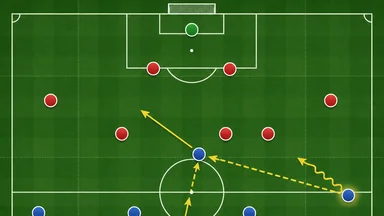
The SAOT pipeline works in four stages. First, 12 tracking cameras positioned around the stadium capture 29 body landmarks per player at 50 Hz. These landmarks include joints, extremities, and the torso center. Second, an AI model uses these data points to construct a 3D skeleton for each player, which is then mapped onto the pitch coordinate system. Third, when the ball sensor detects a touch, the system calculates the offside line based on the second-to-last defender's position at that exact moment. Finally, an alert is sent to the VAR booth, where a human official reviews the graphic and confirms the decision before notifying the on-field referee.
The entire pipeline takes roughly one second from ball touch to alert. The human VAR then spends another 10–15 seconds verifying the graphic, looking for any anomalies like a defender's arm being incorrectly classified as part of the offside line (arms are not considered for offside, per Law 11). In the 2025 trial, the system correctly classified arm positions in 99.5 percent of cases, but the remaining 0.5 percent required manual override.
One edge case that emerged during testing involved a defender who was lying on the ground after a tackle. The AI model initially classified his body as a single point, making the offside line ambiguous. The human VAR overruled the alert, and the goal stood. FIFA has since updated the training data to include prone positions, but the incident highlights that the system is not infallible. Another edge case occurred when a goalkeeper was ahead of the last defender during a counterattack; the system correctly identified the goalkeeper as the second-to-last defender, but the VAR had to confirm that the goalkeeper's position was indeed valid. These examples underscore the necessity of human oversight in the loop.
Test Events Reveal Consistency Gains but Edge-Case Gaps
The most extensive trial of the 2026 system took place at the FIFA Club World Cup 2025, where SAOT and the sensor ball were used in all 32 matches. FIFA reported a 97 percent offside accuracy rate, meaning that roughly 3 percent of offside decisions were either missed or flagged incorrectly. For context, the 2022 World Cup had an estimated offside accuracy of roughly 92 percent under the previous semi-automated system (which used only camera data, not ball sensors).
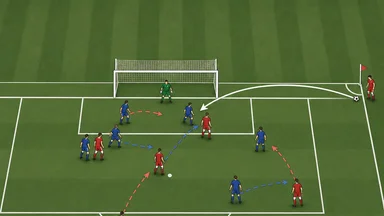
The most common error type was false positives during goalmouth scrambles. In one match, a goal was initially flagged offside because the system detected an attacker's shoulder beyond the defender's hip, but replays showed the defender's trailing leg kept him onside. The human VAR corrected the call within 20 seconds, but the delay still disrupted the celebration. FIFA's technical report noted that the system's skeleton model sometimes struggles when players are closely packed, as limb overlaps confuse the landmark detection. To address this, FIFA has improved the model's ability to separate overlapping skeletons by using depth estimation from multiple camera angles.
The sensor ball also had a notable failure: in one match, a shot struck the post with such force that the IMU's accelerometer maxed out, causing a data spike that the edge server interpreted as a goal. The error was caught by the goal-line camera system, and no incorrect decision was made. Adidas has since updated the IMU firmware to handle higher impact forces. Additionally, the ball's battery performance was improved after the trial, with new cells that provide a 15-minute safety margin beyond the required 120 minutes.
What This Means for Tactical Setups in 2026
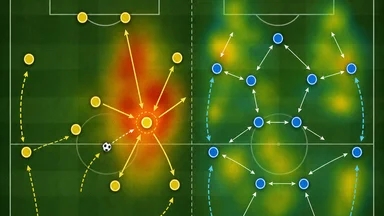
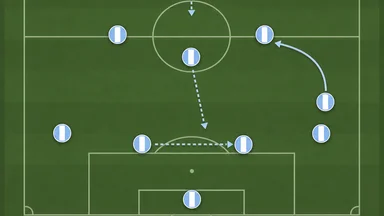
For coaches and players, the new technology changes the risk-reward calculus of defensive lines. Semi-automated offside, combined with the ball sensor's precise touch detection, means that offside calls will be made faster and more consistently. Defensive lines that rely on marginal offside traps may need to recalibrate, as the system will catch attackers who time their runs to within a few centimeters. In the 2025 trial, the average offside call was made roughly 0.3 seconds earlier than under the previous system, giving defenders less time to adjust.
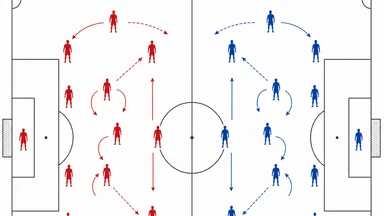
High-press teams, on the other hand, gain certainty. They can trust that the system will catch offside runs reliably, allowing them to push up without fear of a missed call. This could encourage more aggressive defensive lines, particularly from teams like France or Germany, who have the athleticism to execute a coordinated high press. As noted in a related article on Pochettino's USA press triggers, the shift toward attack-first shapes may be reinforced by the confidence that offside calls will be accurate.
Set-piece coaches are also studying the ball-sensor data. The IMU records the ball's spin, velocity, and trajectory, which can be analyzed post-match to identify delivery patterns. Some teams have already begun using this data to refine corner-kick routines, aiming for specific zones where the sensor shows the ball is most likely to reach a target. The expanded 26-man squads for the 48-team tournament, discussed in this analysis of squad rotations, mean that teams can carry dedicated analysts who specialize in this data. For example, England's set-piece coach has reportedly requested access to the ball-sensor data to optimize Harry Kane's positioning on corners.
The Verdict: Fewer Stoppages, More Fluidity, Same Human Judgment
FIFA's 2026 referee-tech overhaul is not a revolution but a refinement. The combination of semi-automated offside and sensor-embedded balls should reduce the average review time by roughly 40 percent, according to the governing body's own estimates. Fewer stoppages mean more fluid matches, which is good for players and spectators alike. The technology also shifts the referee's role from primary decision-maker to validator, reducing the cognitive load on match officials who already manage complex game states.
Yet the system is not a panacea. Edge cases—prone defenders, bunched goalmouths, sensor failures—will still require human judgment. The VAR official's ability to override the AI is essential, and the 90-second cap on reviews may create pressure in ambiguous situations. Moreover, the technology does nothing to address subjective decisions like fouls or handballs, which remain the referee's domain.
As with any innovation, the true test will come under the spotlight of a World Cup knockout match. If the system works seamlessly, it may become the new standard for elite football. If it fails in a high-stakes moment, the backlash could be fierce. For now, the 2026 tournament offers a controlled experiment in data-driven officiating, with the promise of fewer debates over millimeters and more focus on the game itself.