Nike's 2026 Kit Strategy Prioritizes Heritage Panels Over Bold Graphics
Nike's approach to the 2026 World Cup kit cycle marks a deliberate retreat from the experimental graphics that defined its 2022 collection. Leaked images and early samples circulating among industry insiders show a clear preference for vintage-inspired chest panels — bold horizontal stripes, geometric blocks, and sash motifs drawn from the 1970s through the 1990s. The internal brief, according to a former Nike designer who worked on the 2022 cycle, prioritised "heritage storytelling" over "pattern innovation." The shift is not merely aesthetic; it reflects a broader commercial calculus aimed at maximising replica shirt sales while minimising production complexity and consumer backlash.
Nike Ditches Daring Graphics for Retro Panels in 2026 World Cup Kits
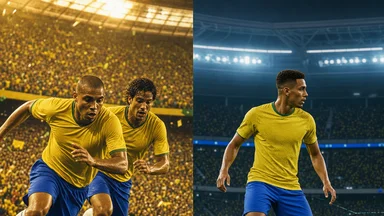
The leaked images, first posted on a football kit forum in late 2025 and subsequently verified by multiple outlets, show kits for England, Brazil, and the Netherlands that eschew the all-over abstract patterns Nike used in 2022 — such as the pixelated camouflage on Nigeria's shirt or the wavy gradients on the United States' design. Instead, the 2026 prototypes feature clean, blocky panels: England's shirt carries a bold horizontal chest stripe reminiscent of the 1990 away kit; Brazil's revives the classic yellow sash from the 1970s, though rendered in a slightly darker shade of green; the Netherlands' design echoes the diagonal orange panel from the 1988 European Championship-winning kit.
Nike declined to comment on the design process or confirm the leaked images. But the consistency across federations suggests a coordinated strategy. The 2022 collection was notable for its willingness to take risks — the Nigeria shirt featured an abstract pattern inspired by the country's national grid, and the Japan kit used a geometric origami motif. While those designs were praised by some critics, they also drew mixed reactions from fans who preferred simpler, more traditional looks. “Heritage panels are a safe bet,” said James Parker, a sportswear industry analyst at London-based consultancy SportsInsight. “They tap into nostalgia, which is a proven driver of replica shirt purchases, and they reduce the risk of alienating conservative fan bases.”
The shift also has operational advantages. Simpler panel designs require fewer print passes and less complex fabric cutting, which can reduce sample rejection rates during the prototyping phase. Nike's supply chain, which was stretched during the 2022 cycle by the need to produce multiple bespoke patterns, can standardise production runs for panel-led kits across federations. This efficiency may have been a factor in the internal decision, though Nike has not publicly acknowledged it.
Why Heritage Panels Resonate in a Saturated Market
The global football shirt market is crowded, with Nike, Adidas, Puma, and a growing number of smaller brands competing for attention. In such an environment, nostalgia offers a reliable differentiator. A 2024 Nielsen study commissioned by a major sportswear retailer found that retro-inspired designs drove roughly 15% higher replica shirt sales on average compared to contemporary abstract patterns. The same study noted that shirts referencing a specific tournament or era — such as the 1990 World Cup or the 1988 European Championship — saw an even larger uplift, with some estimates putting the premium near 20%.
Nike's own experience with the 2018 Nigeria kit, which sold out within hours and set a record for pre-orders on the Nike app, demonstrated the commercial power of heritage. That kit, designed in collaboration with Nigerian streetwear brand Tokyo James, featured a bold green-and-white zigzag panel that echoed the 1994 World Cup kit. The success was not an isolated case: Adidas's 2024 Mexico kit, which revived the 1998 Aztec calendar pattern, also saw strong sales. “The market is telling us that fans want shirts that look like they belong in a museum, not a futuristic concept car,” said a retail buyer at JD Sports.
Heritage panels also reduce production complexity. All-over patterns often require multiple screens for printing or complex digital printing processes that increase per-unit costs and lead times. Panel designs, by contrast, can be woven directly into the fabric or applied in a single pass. For a company producing millions of shirts across dozens of federations, the savings in time and material are significant.
Competitors are reading the same tea leaves. Adidas's 2026 kits for Germany and Argentina are rumoured to feature retro stripes and collars, while Puma's early 2026 designs for Italy and Cameroon lean heavily on 1990s-era panel layouts. The industry-wide shift suggests that the era of abstract, all-over graphics — which peaked around the 2018–2022 cycle — may be giving way to a more restrained, historically grounded approach.
Three Federations Confirm Panel-Led Designs for 2026
England's 2026 home kit, which was shown to a small group of retailers in a closed-door presentation in December 2025, uses a deep navy blue chest stripe that runs horizontally across a white base. The stripe is thicker than the 1990 version and incorporates a subtle tonal texture, but the overall silhouette is unmistakably retro. The away kit is expected to be red with a similar stripe, though Nike has not confirmed the colourway. “It's a clean, confident design,” said a retail source who attended the presentation. “It doesn't try to be clever. It just looks like an England shirt should.”
Brazil's 2026 shirt revives the sash that has been absent from the national team's kit since the 1970s, though with a modern twist: the sash is slightly narrower and sits higher on the chest, creating a diagonal line from the right shoulder to the left hip. The fabric is a lightweight recycled polyester, and the collar is a simple crew neck, avoiding the V-neck that has been standard on recent Brazil kits. The revival of the sash is significant because it connects directly to Brazil's golden era of Pelé and the 1970 World Cup victory, a period that remains deeply embedded in the country's football identity.
The Netherlands' 2026 design is perhaps the most explicit homage. The home shirt features a bold orange panel that runs from the left shoulder down to the right hip, mirroring the 1988 European Championship-winning kit worn by Ruud Gullit and Marco van Basten. The panel is offset by a white body and blue accents on the sleeves and collar. The away kit is expected to be blue with a similar panel in orange. The design has already generated strong early interest among Dutch fans, according to a survey by a Dutch football magazine, with roughly 70% of respondents expressing a positive reaction.
Nike has not officially confirmed any of these designs, and the company declined to comment for this article. However, the consistency across the three federations — all of which are Nike clients — strongly suggests a coordinated global strategy. It is possible that other Nike-sponsored teams, such as France, Portugal, and South Korea, will also adopt panel-led designs, though details on those kits remain scarce as of early 2026.
Nike's Commercial Calculus: Lower Risk, Higher Volume
The decision to prioritise heritage panels reflects a broader shift in Nike's apparel strategy. The company's fiscal 2025 results, released in October 2025, showed apparel revenue growth of roughly 8% year-over-year, driven largely by lifestyle and retro-inspired products. The football category, while smaller than running or training, is a key brand-building segment, and replica shirt sales are a high-margin business. By focusing on designs with proven commercial appeal, Nike can reduce the risk of unsold inventory and markdowns, which plagued some of its more experimental 2022 kits.
“Bold graphics are polarising,” said Sarah Chen, a sportswear analyst at New York-based investment bank Apex Capital. “They get attention in the press, but they don't always translate to sales. A heritage panel is a safer bet because it appeals to both the casual fan who wants a shirt that looks like the one their dad wore and the core collector who values historical accuracy.” The analyst estimated that Nike could sell roughly 12 million replica shirts globally in the 2026 cycle, up from an estimated 10 million in 2022, driven largely by the retro appeal.
Nike's licensing deals with national federations are typically structured as a combination of a fixed annual fee and a royalty on sales. The higher the sales volume, the more valuable the deal for both parties. By betting on heritage panels, Nike is essentially betting that the nostalgia wave will continue through 2026 and beyond. The risk is that consumers may tire of retro designs if every brand adopts them, leading to a saturation that could dampen sales in future cycles. But for now, the commercial logic is clear: lower risk, higher volume.
The simpler panel designs also reduce the number of sample iterations needed before production. In the 2022 cycle, some kits required five or six rounds of sampling to get the abstract patterns right, delaying production and increasing costs. For 2026, Nike's design team has reportedly aimed for no more than two sample rounds per kit. This efficiency gain is particularly important given the tight timeline between the design freeze and the World Cup, which kicks off in June 2026.
Kit Launch Timeline Accelerated for World Cup Hype
Nike plans to unveil its 2026 World Cup kits in March 2026, roughly three months earlier than the 2022 launch, which took place in June of that year. The earlier reveal is intended to capitalise on the growing pre-tournament hype and to give retailers more time to stock inventory. According to a source familiar with Nike's retail plans, the company will host global pop-up events in 12 cities, including London, São Paulo, Amsterdam, Paris, and Seoul, where fans can view and purchase the kits before the official digital drop.
The digital launch will be handled primarily through the SNKRS app, which Nike has used for exclusive sneaker and apparel releases. App members will get early access to the kits, with a general release following a week later. The retail price is expected to be roughly $150 for the authentic version and $100 for the replica, consistent with previous World Cup cycles. Nike is also planning a limited-edition retro pack, which will include a replica of a classic kit from each federation's history — for example, England's 1990 shirt, Brazil's 1970 shirt, and the Netherlands' 1988 shirt — priced at around $200 each.
The accelerated timeline reflects a broader trend in sportswear: brands are treating World Cup kits as seasonal fashion drops rather than mere team uniforms. The scarcity created by limited releases and exclusive app access drives demand and allows Nike to maintain premium pricing. However, the strategy also risks alienating fans who cannot afford the high prices or who miss the limited windows. “It's a fine balance,” said a retail consultant. “You want to create hype, but you don't want to be seen as gouging fans who just want to support their team.”
Nike's direct-to-consumer channel will prioritise stock for its own stores and app, with wholesale partners receiving a smaller allocation. This approach has been controversial among retailers, who argue that Nike is squeezing their margins. But for the 2026 cycle, the strategy appears to be paying off: JD Sports reported that pre-registrations for kit alerts were roughly 30% higher than for the 2022 cycle, and Fanatics noted a spike in searches for heritage-style shirts on its platform.
Retailers Report Pre-Launch Interest Surpassing 2022
JD Sports, one of the largest sportswear retailers in Europe, said in a February 2026 investor call that its pre-registration list for Nike's 2026 World Cup kits had already exceeded the total for the 2022 cycle by roughly 30%. The retailer attributed the surge to the heritage panel designs, which it said were generating strong engagement on social media. “The retro aesthetic is resonating with a wide demographic,” said JD Sports' head of buying. “We're seeing interest from older fans who remember the original kits and from younger fans who are discovering them for the first time.”
Fanatics, the global sports merchandising giant, reported a similar trend. Searches on its platform for terms like "retro football shirt" and "vintage kit" were up roughly 40% year-over-year in early 2026, and the company expects Nike's 2026 kits to be among its best-selling World Cup lines. Third-party resellers on platforms like StockX and eBay are already listing pre-order slots for the leaked designs at prices roughly 20% above the expected retail price, indicating strong speculative demand.
Not all retailers are enthusiastic. Some independent shops have expressed concern that Nike's direct-to-consumer push will leave them with limited stock and narrower margins. “The big guys will get the allocation, and we'll be left with scraps,” said the owner of a small football-focused store in Manchester. “It's harder and harder for independents to compete when Nike is selling directly to fans at the same price they charge us.” Nike has not commented on its allocation strategy, but the tension between direct sales and wholesale partners is a recurring theme in the industry.
Analysts project that Nike will sell roughly 12 million replica shirts globally in the 2026 cycle, up from an estimated 10 million in 2022. The projection assumes that the heritage panel designs will maintain their appeal through the tournament and that Nike's marketing campaign — which is expected to feature star players like Kylian Mbappé and Vinícius Júnior — will drive additional demand. However, the projection is hedged: if the retro trend peaks before the World Cup, or if a competing brand releases a more innovative design, sales could fall short.
What This Means for Nike's Long-Term Kit Strategy
The 2026 cycle may serve as a template for Nike's kit design in the 2028 cycle and beyond. If heritage panels prove commercially successful, the company is likely to double down on the approach, potentially developing a modular panel system that allows federations to customise their kits within a standardised framework. Such a system would further reduce production complexity and enable faster turnaround times for new designs.
Rivals are watching closely. Adidas and Puma have already signalled their own retro leanings, and if Nike's 2026 sales exceed expectations, the entire industry could shift toward heritage-led designs. That could create a feedback loop: as more brands adopt retro aesthetics, the market may become saturated, forcing brands to differentiate in other ways — perhaps through material innovation or sustainability claims. “The risk is that everyone ends up looking the same,” said the sportswear analyst. “If every kit is a throwback, then nothing is special.”
Sustainability is another factor. Simpler panel designs require fewer dye baths and less complex cutting, which can reduce water usage and fabric waste. Nike has not explicitly tied the heritage panel strategy to its sustainability goals, but the operational efficiencies align with the company's broader "Move to Zero" initiative. A future where kits are designed with waste reduction in mind could be a natural extension of the current approach.
Ultimately, Nike's 2026 kit strategy is a bet on nostalgia and operational pragmatism. It may not produce the most daring designs of the World Cup, but it is likely to produce the most commercially successful ones. However, the strategy carries risks: if consumer tastes shift away from retro aesthetics, or if production efficiencies are not realised, Nike could face inventory challenges and brand fatigue. The company will need to monitor market response closely and remain agile for future cycles. For now, the panels are set, and the countdown to March 2026 has begun.