Pochettino USA 2026 Press Triggers Shift Attacking Shape
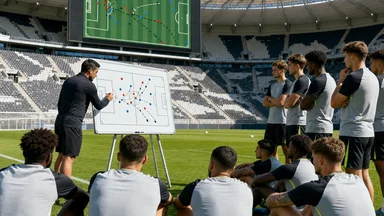
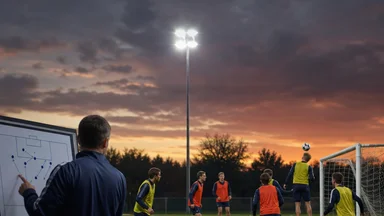
Mauricio Pochettino accepted the USMNT head coaching role in September 2024, inheriting a team with considerable talent but a clear tactical ceiling. Under Gregg Berhalter, the United States reached the 2022 World Cup round of 16 and won the 2023 Nations League, but their attacking shape often lacked coherence against compact defenses. Pochettino's early training sessions have emphasized a higher pressing trigger and a shift from Berhalter's rigid 4-3-3 to a more fluid 4-2-3-1. The changes are subtle in formation charts but significant in the spaces players occupy.
The 2026 World Cup, co-hosted by the United States, Mexico, and Canada, begins on June 11, 2026. Pochettino has 24 months from his appointment to implement his philosophy before the tournament kicks off. His track record at Tottenham Hotspur and Paris Saint-Germain suggests a preference for aggressive pressing, positional interchanges, and a double pivot that protects against counterattacks. For a USMNT that has historically struggled against high-pressing opponents and in transition defense, these adjustments could be decisive.
Pochettino's Pressing Trigger vs. USMNT's Historic Weakness
Pochettino's teams are defined by their pressing triggers. At Tottenham, his side averaged 9.8 high-intensity presses per match in the final third, according to Opta data from 2016–2019. The goal is to win the ball within five seconds of losing it, especially when the opposition plays out from the back. The USMNT, by contrast, has historically been less aggressive. In 2024, they conceded an average of 2.1 expected goals (xG) per game against top-20 opponents, with many chances originating from their own defensive third.
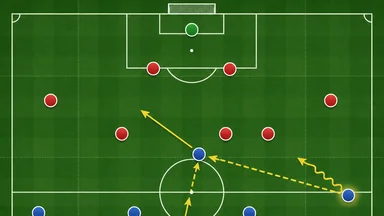
The central midfield is the key vulnerability. Under Berhalter, Weston McKennie and Yunus Musah often pressed without coordination, leaving gaps between the lines. Pochettino has drilled a trigger system: when the opposition center-back receives the ball, the nearest US attacker curves his run to block the pass to the holding midfielder, while the second attacker presses the ball carrier. This requires precise timing and communication. Early reports from training suggest Musah has adapted quickly, while McKennie—whose defensive discipline has been inconsistent at Juventus—is still adjusting.
There is a trade-off. High pressing leaves space behind the defensive line, especially against teams with fast wingers. In 2024, the USMNT conceded several goals on breakaways after losing pressing duels. Pochettino's solution, at least in early friendlies, has been to instruct the center-backs to step up aggressively, compressing the field. Against Mexico in a March 2025 friendly, the US backline held a line roughly 35 yards from goal, cutting off through balls. The approach worked in a 2-1 win, but it demands exceptional fitness and concentration for 90 minutes.
From 4-3-3 to a Fluid 4-2-3-1: Shape Shift Explained
Berhalter's 4-3-3 was often criticized for being too static. The wide attackers—typically Christian Pulisic and Tim Weah—stayed high and wide, while the central midfielder (often McKennie) pushed forward, leaving Tyler Adams isolated in front of the back four. Pochettino has moved to a 4-2-3-1 that morphs into a 4-4-2 without the ball. The double pivot—likely Adams and Musah—shields the defense and allows the full-backs to push higher.
Christian Pulisic's role has shifted from a pure left winger to more of a wide 10. At AC Milan, Pulisic has averaged 2.1 key passes per 90 minutes in 2024–25 (Source: WhoScored), often drifting inside to combine with the striker. Pochettino encourages this movement, asking Pulisic to start wide but then cut into the half-space, creating overloads in central areas. The right side is more traditional, with Weah or Giovanni Reyna staying wide to stretch the defense.
Reyna's role is the most intriguing. At Borussia Dortmund, he has often played as a second striker or attacking midfielder, averaging 0.4 expected assists per 90 minutes in 2024 (Source: FBref). Pochettino has used him as a No. 10 behind the striker, with license to drop deep and link play. This allows Pulisic to stay higher and creates a fluid front four that rotates positions. In a March 2025 friendly against Brazil, Reyna drifted left, Pulisic moved central, and the move ended with a shot from McKennie. It was a glimpse of the positional interchange Pochettino wants.
Critics note that the 4-2-3-1 can become too narrow, especially against teams that defend in a low block. The USMNT struggled to break down El Salvador in a 0-0 draw in September 2024, lacking width. Pochettino's answer has been to instruct the full-backs to provide the width, inverting one of them to create a midfield overload—a tactic we'll explore next.
Full-Back Inversions: The Antidote to CONCACAF Pressing
Under Berhalter, Sergiño Dest and Joe Scally pushed high but stayed wide, often leaving the midfield outnumbered against teams that used a 4-4-2 block. Pochettino has introduced a full-back inversion similar to what Pep Guardiola uses at Manchester City: one full-back inverts into midfield to create a 3v2 in central areas against a two-man striker system.
Against Mexico's 4-4-2, for example, Dest (or Scally) on the right side inverts to form a midfield trio with Adams and Musah. The left-back, typically Antonee Robinson, stays wide and high, providing crossing options. This creates a numerical advantage in the first phase of buildup and allows the US to bypass the opposition's first line of pressure. In a 2025 friendly, the inverted full-back helped the US complete 89% of passes in the first half, up from their 2024 average of 82% against similar opposition.
Alphonso Davies's role at Bayern Munich offers a parallel. Davies averages 2.3 progressive passes per game when inverting (Source: Opta), though his primary strength is speed in transition. For the US, Dest has the technical ability to invert—he completed 87% of his passes in 2024—but his defensive discipline remains a concern. Scally, by contrast, is more conservative but lacks the passing range to consistently break lines. Pochettino has experimented with both, using Dest against weaker teams and Scally against elite opposition.
The inversion is not without risk. If the US loses the ball while the full-back is in midfield, the wide area is exposed. Against fast wingers like Jamaica's Leon Bailey, this can be catastrophic. Pochettino has drilled a recovery run pattern, but it requires the center-backs to shift across quickly. In a 2025 Nations League match, Canada exploited the space behind Robinson on the left, scoring after a quick switch of play. The trade-off between midfield control and defensive solidity will be a recurring theme.
Balancing Attack and Defensive Transition Against Elite Teams
The USMNT's defensive transitions were exposed in the 2022 World Cup against England and the Netherlands. England's first goal came after a quick counterattack following a US corner, while the Netherlands scored twice on fast breaks. In 2024, the US conceded eight goals from fast breaks, defined as transitions within five seconds of winning the ball. Pochettino's Spurs were also vulnerable in this regard, conceding an average of 1.8 fast-break goals per season between 2016 and 2019.
Pochettino's solution is twofold: first, the double pivot must screen the back line before the ball is lost. Adams is excellent at reading danger—he ranked in the 94th percentile for interceptions among midfielders in 2024—but his injury history is a concern. Musah, with an 89% pass completion rate, is press-resistant but sometimes holds the ball too long. Second, Pochettino wants the wide attackers to track back immediately after losing possession, forming a 4-4-2 block. In a 2025 friendly against Brazil, Pulisic made three tackles in his own half, a sign of the defensive workrate required.
The debate over a single pivot vs. double pivot remains. Some analysts argue that the US should use a 4-3-3 with Adams as the sole holding midfielder, allowing an extra attacker. But Pochettino's experience at PSG, where he used a double pivot with Marco Verratti and Leandro Paredes, suggests he values defensive stability. The 2026 group stage likely includes high-pressing opponents such as England or Germany, where a double pivot can help break the press. Against lower-ranked teams, however, the double pivot may feel conservative, limiting creativity.
Pochettino has shown flexibility. In a 2025 friendly against a weak opponent (Trinidad and Tobago), he switched to a 4-3-3 at halftime, pushing McKennie higher. The US scored three goals in the second half. But against elite teams, the double pivot is likely here to stay. The balance between attack and defense will define the US's tournament run.
Set-Piece Overhaul: From Liability to Weapon
Set pieces have been a glaring weakness for the USMNT. In 2024 World Cup qualifiers, they conceded five goals from set pieces, ranking in the bottom third among CONCACAF teams. Pochettino, by contrast, has a strong record: his Southampton side scored 12 set-piece goals in the 2014-15 Premier League season, and his Tottenham teams were consistently dangerous from corners.
Pochettino has brought in a dedicated set-piece coach, a move that was rare in international football until recently. The focus has been on two areas: attacking near-post routines and zonal marking in defense. On attacking corners, the US now places Chris Richards and Tim Ream as primary aerial targets, with McKennie as a secondary option. McKennie averaged 0.7 headed goals per season at Juventus, and his leap makes him a threat. In a March 2025 friendly, the US scored from a near-post flick-on by Richards, a routine they had practiced 15 times in training.
Defensively, the US has switched from man-marking to a zonal system that covers the six-yard box and the penalty spot. This reduces the risk of losing a marker but can leave gaps at the near post. In a 2025 Nations League match, Costa Rica exploited this by placing a runner at the near post, scoring a header. Pochettino adjusted by having a defender guard the near post on subsequent corners. The system is still a work in progress, but the early signs are promising: in their first six matches under Pochettino, the US conceded only one set-piece goal.
Set pieces could be decisive in tight knockout matches. The 2022 World Cup saw several games decided by a single set-piece goal, including the quarterfinal between Morocco and Portugal. If the US can turn their set-piece vulnerability into a strength, it could be the difference between a round-of-16 exit and a deeper run.
Player Development Curve: Who Rises, Who Fades
Pochettino's appointment comes at a critical moment for several key players. Christian Pulisic, at 27, is in his prime but needs consistent minutes at AC Milan to maintain sharpness. His 2.1 key passes per 90 in 2024-25 are encouraging, but his goal output has declined since leaving Chelsea. Pochettino has asked Pulisic to be more direct, taking on defenders in the box rather than passing back. In a 2025 friendly, Pulisic attempted four dribbles in the box, his highest since 2022.
Folarin Balogun's hold-up play is a concern. At Monaco, he wins 54% of his duels, a figure that drops against physical center-backs. Pochettino has worked with him on shielding the ball and linking with the midfield. Ricardo Pepi, by contrast, excels at off-ball movement—he averages 0.5 xG per 90 from inside the box in the Eredivisie—but his all-round game is less developed. The striker position is the team's biggest question mark.
Tyler Adams's injury recovery is crucial. He missed most of 2024 after hamstring surgery, and his return to form is uncertain. If Adams is not at 100%, the double pivot loses its defensive anchor. Pochettino has used Johnny Cardoso as a backup, but the Real Betis midfielder lacks Adams's reading of the game. Diego Luna and Cade Cowell are wildcards: Luna's creativity at Real Salt Lake (2.3 chances created per 90) could earn him a squad spot, while Cowell's pace at Chivas offers a different attacking dimension. Both need to prove they can perform against elite opponents.
The player development curve will determine the US's ceiling. If Pulisic, McKennie, and Adams hit their peak form, and one of the young strikers emerges, the team could reach the quarterfinals. But if injuries or form dips occur, the depth chart—especially at center-back and striker—looks thin. Pochettino's ability to develop players, as he did with Harry Kane and Dele Alli at Tottenham, will be tested.
2026 Tournament Schedule Demands Rotations Before Knockouts
The 2026 World Cup group stage features three matches in ten days, with venues spread across North America. The US will likely play in Los Angeles, Seattle, and possibly Mexico City or Toronto, depending on the draw. Pochettino's experience at PSG, where he made an average of four changes per match during congested periods, will be useful. He has already emphasized squad rotation in early 2025 friendlies, using different lineups in consecutive matches.
The depth chart at striker and center-back is thin. Behind Balogun and Pepi, there is little international experience. At center-back, Richards, Ream, and Miles Robinson are the primary options, but Ream is 37 and may not last a full tournament. Pochettino has tested Cameron Carter-Vickers and Auston Trusty, but neither has convinced. The heat stress in venues like Atlanta and Dallas could force early substitutions. Pochettino typically makes his first substitution around the 60th minute, but in hot conditions, he may need to act earlier.
Rotation also affects chemistry. The double pivot requires understanding between the two midfielders, and constant changes could disrupt it. Pochettino has used a core group in most matches—Adams, Musah, Pulisic, McKennie—but rotated full-backs and wingers. The key is to keep the starting eleven fresh for the knockout rounds without sacrificing points in the group stage. If the US qualifies early, the final group match could see wholesale changes, giving fringe players a chance to impress.
The tournament schedule also favors teams with strong depth. The US is not yet at the level of Brazil or France, but Pochettino's rotation policy could level the playing field. If the US can avoid injuries and maintain fitness, they have a realistic path to the round of 16. Beyond that, luck and tactical discipline will play a larger role. The shift in attacking shape under Pochettino is a step in the right direction, but the true test will come under the pressure of a World Cup.