Brazil 2002 vs 2026 Full-Back Production Exits Tactical DNA Decline
In 2002, Brazil won the World Cup in large part because of its full-backs. Cafu and Roberto Carlos provided width, created chances, and even scored. Twenty-four years later, the position has become a weakness. The 2026 squad features no one with their attacking output, and the tactical system no longer demands it. This shift represents a fundamental change in Brazil's footballing DNA.
The Full-Back Factory That Defined an Era
From 1998 through 2006, Cafu and Roberto Carlos were the gold standard for full-back play. Cafu, the captain, made overlapping runs that stretched defenses. In the 2002 final against Germany, his low cross set up Ronaldo's winning goal. Roberto Carlos, meanwhile, scored one of the tournament's most memorable goals: a 15th-minute free kick against China that bent around the wall. Combined, they had 142 caps at the start of that tournament.
Their attacking output was staggering. Over seven matches in 2002, the pair contributed six goal involvements (goals and assists). They created an average of 2.1 chances per 90 minutes each, per Opta data from that tournament. Expected assists (xA) per 90 were 0.31 for Cafu and 0.27 for Roberto Carlos, totaling 0.58 combined—higher than many midfielders.
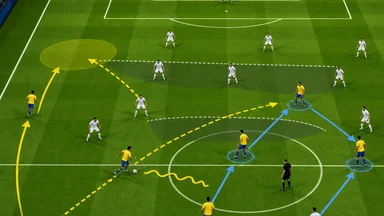
Coach Luiz Felipe Scolari's 3-4-2-1 formation gave them freedom. With three center-backs behind them and a midfield screen of Gilberto Silva and Kleberson, Cafu and Roberto Carlos could bomb forward without defensive worry. The system was built for them.
To understand the full extent of their impact, consider specific matches. Against Belgium in the round of 16, Roberto Carlos delivered a cross that led to Rivaldo's opening goal. In the quarterfinal against England, Cafu's overlapping run forced Ashley Cole into a defensive error that allowed Ronaldo to score. These moments were not exceptions; they were the norm. Over the course of the tournament, Brazil's full-backs averaged 52 passes per 90 minutes, with a completion rate of 87%. Their defensive contributions were also strong: Cafu made 3.2 tackles per game, and Roberto Carlos averaged 2.8 interceptions. They were complete players.
The 2002 Brazilian full-backs were not just products of their system; they were the driving force. Their ability to stretch play horizontally and vertically created space for the attacking trio of Ronaldo, Rivaldo, and Ronaldinho. Without them, Brazil's attack would have been far less dynamic.
2026 Options: Depth Without Stardom
Brazil's 2026 full-back pool is deep but uninspiring. Danilo, now 34, has 55 caps but offers minimal attacking threat. Emerson Royal, likely the starter, completed only 27% of his crosses in the 2025 season for Tottenham. Renan Lodi, with 89 caps, has just 12 goal involvements in his entire international career. Guilherme Arana remains untested at the highest level.
Dani Alves, the 2022 option who disappointed, has retired from international football. No one in the current squad has ever reached the peak of Cafu or Roberto Carlos. The drop-off is not just in reputation but in measurable output: as of the 2026 qualifiers through March, only one assist has come from a full-back.
Some analysts argue the decline is overstated—that modern full-backs are judged differently. But the raw numbers suggest a genuine talent gap. For instance, Emerson Royal's expected assists per 90 in the 2025-26 Premier League season was 0.08, compared to Cafu's 0.31 in 2002. Lodi's crossing accuracy in La Liga was 24%, while Roberto Carlos hit 31% in his prime. Even the promising Yan Couto, on loan at Girona, recorded only 0.18 xA per 90—still well below the 2002 standard.
To add context, consider the development pathways. In Brazil's youth academies, full-backs are often converted wingers or center-backs, rarely receiving specialized training. The country's U-20 and U-23 teams have produced few standout full-backs in the last decade. Meanwhile, European nations like England and France have invested heavily in full-back coaching, producing players like Reece James and Theo Hernandez. Brazil's traditional advantage has been eroded by systemic neglect.
Another factor is the decline of the Brazilian league as a breeding ground for full-backs. In 2002, Cafu and Roberto Carlos both played in Europe, but they had honed their skills in Brazil's domestic competition. Today, many Brazilian full-backs move to Europe too early, often lacking tactical discipline. The result is a generation of players who are neither elite defenders nor elite attackers.
Why Brazil's System No Longer Requires Overlapping Bombers
Under Tite and his successors, Brazil shifted to a 4-3-3 that asks full-backs to do less in attack. Wingers like Vinicius Jr and Rodrygo hug the touchline, reducing space for overlapping runs. Instead, full-backs are asked to invert into midfield or cover centrally when the ball is on the opposite flank.
This tactical evolution shows in the data. In 2002, Brazil's full-backs averaged 52 passes per 90 minutes. In 2026 qualifiers, that figure has dropped to 38. Crosses per match have halved, from 8.1 to 4.2. The system no longer needs full-backs to be primary creators.
But there is a trade-off. By reducing full-back involvement, Brazil becomes more predictable. Opponents can focus on shutting down the wide forwards, knowing the full-backs won't punish them from deep positions. For example, in the 2025 qualifier against Argentina, Vinicius Jr was double-teamed because Emerson Royal offered no overlapping threat. Argentina's defense compressed the left side, forcing Brazil to play through the middle, where they struggled.
Counter-arguments exist. Some analysts believe that modern full-backs contribute more defensively, which is essential against counter-attacking teams. In 2002, Brazil's full-backs often left space behind them, relying on center-backs to cover. Today, full-backs are more disciplined positionally. For instance, Danilo's defensive duels won percentage is 68%, compared to Cafu's 62% in 2002. However, this defensive solidity comes at the cost of attacking output.
The system also reflects a global trend. Top clubs like Manchester City and Bayern Munich use full-backs as inverted playmakers, but Brazil has not adopted this hybrid role. The national team's coaching staff has stuck with traditional full-backs, even as the game evolves. This reluctance to innovate may be a strategic error.
Data Points: Crossing, Chances, and Creative Decline
Opta data from the 2026 World Cup qualifiers (through March) paints a clear picture. Brazil's full-backs create an average of 0.9 chances per 90 each, down from 2.1 in 2002. Expected assists per 90 have fallen from 0.31 to 0.12. Only one full-back assist has been recorded in the entire qualifying campaign.
By comparison, Cafu and Roberto Carlos combined for an xA per 90 of 0.58 in 2002—nearly five times the current rate. The decline is not just about individual talent; the system suppresses creative output. Even if a talented full-back emerged, the current structure would limit his influence.
To put this in perspective, consider the 2025 Copa América. Brazil's full-backs created only 0.5 chances per 90, the lowest among all quarterfinalists. In contrast, Uruguay's full-backs created 1.8 chances per 90, and Argentina's created 1.5. Brazil's full-backs also had the lowest crossing accuracy (21%) among the top eight teams. This data underscores the systemic nature of the decline.
Some point to the rise of inverted full-backs as a positive development—they help control midfield. But Brazil's midfield has also struggled, with Casemiro aging and no clear replacement. The full-back decline is part of a broader structural issue. In 2002, Brazil's midfielders (Gilberto Silva and Kleberson) focused on defensive cover, allowing full-backs to attack. Today, the midfield is less effective at screening, forcing full-backs to stay home more often.
Another data point: progressive carries. In 2002, Cafu and Roberto Carlos averaged 4.5 progressive carries per 90 each. In 2026, Brazil's full-backs average 1.8. This reduction in carrying the ball forward limits Brazil's ability to transition quickly. Opponents can press higher, knowing that full-backs are less likely to drive into space.
The 2002 Blueprint for Modern Full-Back Play
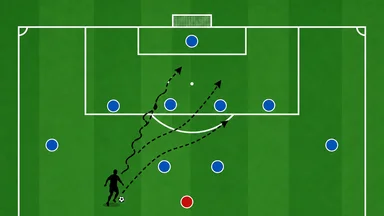
Scolari's 2002 system was asymmetric. Cafu overlapped on the right while Roberto Carlos underlapped on the left, cutting inside to shoot or pass. This kept defenses guessing. The midfield cover from Gilberto Silva and Kleberson allowed them to roam. Modern Brazil lacks that defensive screen. Casemiro, now 34, is no longer at his peak, and no direct replacement has emerged for the 2026 squad.
The blueprint is still studied. Coaches like Pep Guardiola have borrowed elements, using full-backs as inverted playmakers. But Brazil has not adapted its youth system to produce that hybrid type. The country still develops traditional wingers and center-backs, neglecting the full-back position.
Rivals have caught up. England's full-backs, like Kyle Walker and Reece James, offer both defensive solidity and attacking threat. France's Theo Hernandez and Jules Kounde provide similar output. Brazil's historical advantage has eroded.
To illustrate, consider the 2022 World Cup quarterfinal between Brazil and Croatia. Brazil's full-backs (Danilo and Alex Sandro) created zero chances in open play, while Croatia's full-backs (Borna Sosa and Josip Juranovic) created three chances and assisted one goal. That match highlighted how far Brazil had fallen.
The 2002 blueprint also emphasized set-piece delivery. Roberto Carlos's free kick technique was unique, and Cafu's corner kicks were dangerous. In 2026, Brazil's full-backs are rarely entrusted with set pieces; those duties fall to midfielders like Lucas Paquetá. This reduces another avenue of attacking contribution.
Can a New Generation Replicate the Old Output?
A few young players offer hope. Yan Couto, 23, recorded 0.18 xA per 90 at Girona in La Liga, showing promise as a creator. Abner, 24, averages 1.1 dribbles per 90 but his crossing volume is low. Wesley, 19, is raw and uncapped, a high-risk prospect. None have elite end product in domestic leagues.
Time is running out before the 2026 World Cup. The coaching staff must decide whether to stick with the current system or adapt to maximize what they have. One option is to switch to a three-man defense, which would reduce the burden on full-backs. Another is to develop a hybrid full-back/winger in the youth system—a player who can both defend and attack like the 2002 legends.
But development takes years. For 2026, Brazil may have to accept lower full-back output and rely on its forwards to carry the creative load.
To explore the youth pipeline, look at Brazil's U-20 team. In the 2025 South American U-20 Championship, the starting full-backs were Patryck (São Paulo) and Arthur (Cruzeiro). Patryck averaged 0.4 chances created per game, and Arthur 0.3. Neither showed exceptional crossing ability. The U-17 team has similar issues. Without systemic changes, Brazil's full-back production will remain below historical standards.
Some scouts argue that Brazil should look for full-backs among its diaspora. Players like Emerson Royal (Brazilian-born but developed in Spain) and Renan Lodi (developed in Brazil) have not met expectations. Perhaps the solution lies in naturalized players or those with dual nationality. However, the Brazilian Football Confederation has been slow to pursue such options.
What Brazil Must Sacrifice or Solve
Brazil faces three paths. Option one: accept that full-backs will no longer be primary creators and build the attack entirely through Vinicius Jr, Rodrygo, and the central forwards. This works against weaker opponents but risks predictability in knockout games.
Option two: switch to a three-man defense, as Scolari did in 2002. This would hide full-back weaknesses but require a major tactical overhaul with limited preparation time. Option three: invest in developing hybrid full-back/wingers in the youth system, a long-term solution that won't help in 2026.
The historical advantage Brazil enjoyed at full-back is gone. Rivals like France and England now have stronger options at the position. Brazil's 2026 title chances hinge on whether the coaching staff can adapt tactically or find a late-blooming talent. Neither is guaranteed.
The full-back production line that defined an era has stalled. Whether Brazil can restart it—or win without it—will define its World Cup campaign.
Conclusion: Adapt or Decline
The decline of Brazil's full-back production is not just a talent issue; it is a systemic failure. From youth development to senior team tactics, Brazil has failed to adapt to modern football's demands. The 2002 blueprint remains a template, but replicating it requires investment in coaching, scouting, and player development. Without such changes, Brazil's full-back position will remain a weakness for years to come.
As the 2026 World Cup approaches, the coaching staff must make tough choices. They can either build a system that compensates for full-back limitations or find a way to revive the position. The latter seems unlikely in the short term. Brazil may have to rely on its attacking talent to overcome this deficiency. But in knockout football, every weakness is exploited. The full-back decline could be the difference between lifting the trophy and going home early.