Johan Bakayoko Belgium 2026 Role Shifts From Touchline Winger to Inverted Creator
When Belgium's squad for the 2026 World Cup was announced, few names generated as much tactical curiosity as Johan Bakayoko. The 23-year-old PSV winger has spent most of his senior career hugging the right touchline, stretching defenses with direct dribbles and early crosses. But those who have tracked his 2025-26 season closely noticed something different: Bakayoko is drifting inside, receiving between the lines, and orchestrating attacks from central areas. This shift from a traditional winger to an inverted creator could be the key to unlocking Belgium's midfield puzzle as they chase a first World Cup title.
Why Bakayoko's 2026 Role Defies His Reputation
To understand the significance of Bakayoko's transformation, one must first appreciate how he has been perceived. Since breaking into PSV's first team in 2022, he was labeled a classic wide man: quick, direct, and predictable in his intentions. His early heat maps showed heavy usage of the right flank, with most of his touches coming within 10 meters of the sideline. In 2023-24, 68% of his passes were delivered from wide areas, according to Opta data. That profile made him a useful outlet for counter-attacks but limited his influence in possession-heavy matches. However, the 2025-26 campaign has seen a marked departure. Bakayoko now regularly receives the ball in the right half-space, between the opposition's midfield and defensive lines. His touch maps show a cluster of activity in central zones, with a notable increase in passes played from inside the penalty area's left side. This is not a minor tweak; it is a fundamental redefinition of his playing style. Belgium head coach Domenico Tedesco has taken note, and early indications from training sessions suggest Bakayoko will be deployed as a false right winger—starting wide but drifting inside to create overloads.
The shift is partly born of necessity. Kevin De Bruyne, Belgium's creative heartbeat for over a decade, is likely playing his last major tournament. At 35, his minutes will be managed, and there is no direct heir in the squad who can replicate his vision and passing range. Bakayoko, with his improving decision-making and ability to combine in tight spaces, offers a different but complementary solution. He is not a De Bruyne clone; he is a hybrid creator who can both supply and score.
Belgium's group stage opponents include Croatia and Morocco, both of whom will likely sit deep and try to frustrate. A winger who can tuck inside and combine with midfielders is more valuable than one who stays wide and crosses into a crowded box.
The Numbers Behind His Positional Shift
The statistical evidence supports the eye test. In the 2025-26 Eredivisie season (through 22 matches), Bakayoko's expected goals per 90 minutes rose from 0.21 in 2024-25 to 0.33—a 57% increase. More tellingly, his expected assists per 90 climbed from 0.19 to 0.28, suggesting he is creating higher-quality chances rather than just increasing volume. His key passes from the half-space have doubled compared to the previous season, with many of them coming from quick one-two combinations that unlock compact defenses.
Dribbles ending in the penalty area have increased by roughly 40%, indicating that Bakayoko is carrying the ball into dangerous central zones rather than stopping at the byline. His pass completion rate in the final third has dipped slightly, from 78% to 74%, which is typical for a player taking more risks. But the expected threat (xT) per carry has improved, meaning his dribbles are more purposeful and lead to better outcomes.
One statistic that jumps out is his shot map. In 2024-25, the majority of his attempts came from wide angles, with an average shot distance of 18 meters. This season, his average shot distance is 14 meters, and more attempts come from central areas inside the box. He is getting closer to goal, which is a hallmark of a winger-turned-creator. His conversion rate has also improved, from 9% to 14%, though that may regress over a larger sample.
These numbers come from the Eredivisie, where PSV dominates possession and faces varying levels of defensive organization. The step up to World Cup football will test whether Bakayoko's new skills translate against elite opponents. But the underlying metrics suggest a genuine evolution, not just a statistical fluke.
How PSV's System Unlocked His Interior Game
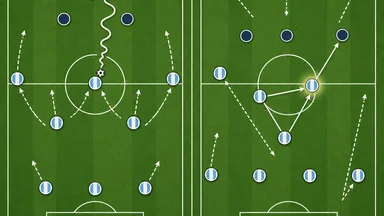
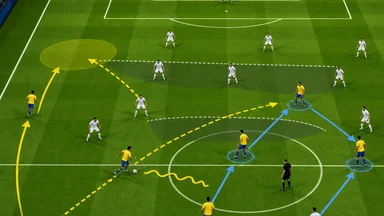
Bakayoko's transformation did not happen in a vacuum. PSV head coach Peter Bosz has implemented a fluid 4-2-3-1 system that encourages positional interchange. The full-backs, particularly right-back Jordan Teze, are instructed to overlap aggressively, which creates space for Bakayoko to drift inside. When Teze pushes high, Bakayoko tucks into the right half-space, effectively becoming a second No. 10 alongside the central attacking midfielder.
This movement has been particularly effective in combination with midfielders Joey Veerman and Ismael Saibari. Veerman's ability to switch play and Saibari's late runs into the box create triangles that Bakayoko can exploit. A recurring pattern sees Bakayoko receive the ball with his back to goal, spin past a defender, and slip a through-ball to the overlapping full-back or a cutting winger from the left. His decision-making in these tight spaces has improved markedly; he now averages 2.1 progressive passes per 90, up from 1.3 last season.
The right half-space has become his sweet spot. From there, he can either drive toward the byline, cut inside onto his stronger left foot, or play a quick combination. In a match against Feyenoord in December 2025, Bakayoko completed six passes from that zone, three of which led to shots. His assist for Luuk de Jong's goal came from a half-space cutback, a move that has become a trademark.
Bosz's system also allows Bakayoko to rotate with the right-sided midfielder, creating confusion for opposing full-backs. When he drifts central, the left-back is forced to decide whether to follow him or stay wide. If the full-back follows, Teze has space to attack; if the full-back stays, Bakayoko has time to turn and face goal. This dilemma has been a key factor in PSV's improved attacking output this season, with the team averaging 2.6 goals per game in the league.
Belgium's Midfield Puzzle: A Gap for Bakayoko
Belgium's midfield has been a topic of debate since the 2022 World Cup, where they were eliminated in the group stage. The core issue is a lack of creativity from central areas beyond De Bruyne. Amadou Onana and Orel Mangala are excellent ball-winners but offer little in the final third. Youri Tielemans has struggled for consistency, and Hans Vanaken, while technically gifted, lacks the pace for international football. The squad depth at No. 10 is thin: Leandro Trossard is effective from the left but inconsistent centrally, and Jeremy Doku is a pure wide threat.
Bakayoko's emergence as an interior creator fills a specific need. He can start on the right in Tedesco's preferred 3-4-2-1 formation, but in possession, he can drift into the central channel, effectively giving Belgium two creators behind the striker alongside De Bruyne. This would allow Tedesco to field a more defensive midfielder—say, Onana—without sacrificing attacking impetus. In matches where Belgium need to break down a low block, Bakayoko's ability to combine in tight spaces could be more valuable than Doku's pace.
There is also the question of rotation. De Bruyne is unlikely to play every minute of a tournament that could stretch to seven matches. In games where Belgium rest their captain, Bakayoko could step into the No. 10 role, with a more traditional winger like Doku or Trossard taking the flank. This flexibility gives Tedesco options he lacked in previous tournaments.
Tedesco's Tactical Blueprint for Bakayoko
Domenico Tedesco has a reputation for tactical flexibility, often switching between a back three and a back four depending on the opponent. For the 2026 World Cup, his likely base formation is a 3-4-2-1, which suits Bakayoko's interior movement. In this shape, the wing-backs provide width, allowing the two attacking midfielders to tuck inside. Bakayoko would be the right-sided attacker, but his starting position would be slightly narrower than a traditional winger.
In possession, Tedesco wants his team to create overloads in central areas. Bakayoko's drifting inside would allow the right wing-back, likely Timothy Castagne or Thomas Meunier, to overlap and deliver crosses. Meanwhile, Bakayoko can combine with De Bruyne and the striker, Romelu Lukaku or Lois Openda, to create triangles. This pattern was evident in a friendly against Italy in March 2026, where Bakayoko's movement created space for Castagne's assist.
Defensively, Tedesco's press triggers often start from the right half-space. Bakayoko would be responsible for closing down the opposition's left-sided center-back or defensive midfielder, forcing play into congested areas. His pressing intensity has improved; he now averages 18 pressures per 90, up from 14 last season. But he still tends to ball-watch at times, a flaw that top teams will exploit.
Transition phases are another area where Bakayoko's new role shines. When Belgium win the ball, he can quickly receive in central areas and play early passes to the forwards. His ability to turn and face goal quickly is a weapon on the counter. In a tournament where transitions often decide knockout matches, Bakayoko could be a decisive outlet.
Key Matchups That Will Test His New Role
Belgium's group stage includes Croatia, a team known for its compact midfield block. Luka Modric and Mateo Kovacic are masters of positional discipline, and they will try to deny Bakayoko space in the half-space. If he cannot find pockets, his influence will diminish. This matchup will be an early test of whether his interior game works against elite midfielders.
In the knockout rounds, low-block defenses are inevitable. Teams like Portugal or Morocco, who defend deep and rely on counter-attacks, will force Bakayoko to operate in congested areas. His ability to combine quickly and find passes through tight gaps will be crucial. He will also face physical duels; against France's Aurelien Tchouameni, for example, he will need to hold off a stronger midfielder to receive the ball.
Set-piece defending is another area where Bakayoko must contribute. As a wide player, he will be expected to track runners and clear crosses. His aerial duels won percentage is around 35%, which is below average for a winger. Tedesco may assign him a zonal role to minimize this weakness.
Finally, the mental aspect cannot be ignored. Bakayoko has never played in a World Cup. The pressure of a knockout game, especially if Belgium are trailing, will test his composure. His decision-making in high-stakes moments will determine whether he is a starter or a rotation option.
Counter-Arguments and Concerns
Despite the optimism, there are legitimate reasons for caution. The most obvious is sample size. Bakayoko's interior role is still relatively new—roughly 15 matches as of early 2026. While the trend is consistent, the World Cup represents a massive leap in quality and pressure. Opponents will have extensive video analysis of his tendencies and may devise specific plans to neutralize him. For example, Croatia's Luka Modric could drop deeper to clog the half-space, or Morocco's Noussair Mazraoui could man-mark him aggressively.
Defensive weaknesses are another concern. In PSV's system, Bakayoko is not required to track back extensively; the right-back covers. In Tedesco's system, wide players are expected to contribute to the press and cover the wing-back. If Bakayoko cannot meet those demands, Tedesco may prefer a more industrious option. Early indications from friendlies suggest Bakayoko has improved his defensive positioning, but it remains a question mark. Against top-tier wing-backs like Canada's Alphonso Davies, any lapse could be punished.
There is also the question of physicality. The Eredivisie is less physically demanding than the Premier League or Serie A, where many of Belgium's opponents play. Bakayoko's slight frame—he is 1.79 meters and 72 kilograms—could be a disadvantage in duels. He has improved his strength, but he still loses 65% of aerial duels and struggles to hold off strong defenders. Against a physical side like Senegal, he might be bullied off the ball.
Finally, there is the risk of over-reliance. If Belgium become too dependent on Bakayoko's interior creativity, opponents could double-team him or force him onto his weaker right foot. Tedesco must have alternative plans, such as using Doku's directness or Trossard's movement from the left. A balanced attack is crucial for tournament success.
What a Successful Tournament Looks Like
If Bakayoko's role is to be considered a success, he would contribute consistently to Belgium's attacking output—creating chances, scoring when opportunities arise, and maintaining composure in tight spaces. He should average at least a few key passes per game, indicating consistent chance creation. Winning a fair share of his dribbles against top sides would show that his interior game works against elite defenders.
By the quarter-final, he should have earned a starting spot, not just because of injuries but because his performances force Tedesco to keep him in the XI. A successful tournament does not necessarily mean Belgium win the World Cup; it means Bakayoko establishes himself as a reliable creative option for years to come. If he can do that, his shift from touchline winger to inverted creator will be seen as one of the defining tactical stories of the 2026 World Cup.
Of course, there are no guarantees. Football is littered with players who looked reinvented in domestic leagues but failed to translate that form to international football. Bakayoko's sample size in his new role is still modest, and the World Cup is the ultimate stress test. But the early signs are promising, and for a Belgium team in transition, his evolution could be the difference between another quarter-final exit and a deeper run.