Gianni Vio's Set-Piece Blueprint Shapes 2026 Knockout Margins
When the knockout rounds of the 2026 World Cup arrive, the difference between a quarterfinal exit and a semifinal berth may come down to a single corner kick routine designed months earlier. The specialist most likely to have drawn it up is Gianni Vio, the 70-year-old set-piece architect who helped Italy win the 2006 World Cup and now quietly advises several national teams. Vio's rise from obsessive database builder to indispensable consultant reflects a broader shift: set-piece coaching has moved from a niche afterthought to a central pillar of tournament preparation.
Vio's Rise: From Obsession to World Cup Currency
Gianni Vio began his coaching career in the lower tiers of Italian football, but his fascination with set pieces was already evident. By the early 2000s, he had compiled a database of roughly 12,000 routines, catalogued by formation, delivery type, and defensive setup. That database caught the eye of Marcello Lippi, who brought Vio onto Italy's staff for the 2006 World Cup. Italy scored four set-piece goals in that tournament, including Marco Materazzi's crucial header in the final against France.
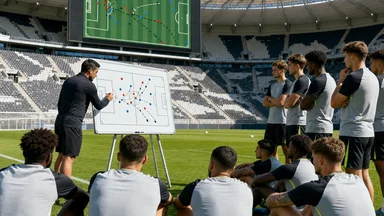
Vio's methods are built on repetition and data. He once told a coaching symposium that his teams rehearse each routine roughly 40 times before a match. The goal is not just to execute but to create a set of automatic responses under pressure. After 2006, Vio worked at various clubs, most recently as a set-piece coach for Tottenham Hotspur under Antonio Conte. But his influence has expanded beyond any single club. As of late 2024, Vio was known to be consulting with at least two federations preparing for 2026, though neither has publicly confirmed the arrangement.
What makes Vio's approach distinctive is his combination of obsessive data collection and theatrical deception. He studies not only his own team's routines but also the defensive tendencies of opponents—how they line up, which players are assigned to zones, how they react to dummy runs. His database has grown to include thousands of clips, each tagged with metadata that allows him to search for patterns. For Vio, a set piece is not a lottery; it is a calculated probability.
The demand for his services has surged. In the 2010s, few national teams employed dedicated set-piece coaches. By 2022, roughly a third of the 32 finalists had one. For 2026, that number is expected to be near universal among knockout-stage contenders. Vio's blueprint has become currency, and other coaches are now trying to decode it.
The Data Edge: How One Goal Alters Knockout Probability
The statistical case for investing in set-piece specialists is compelling. In the 2018 World Cup, 9 of the 15 knockout-stage goals came from set pieces—60 percent. In 2022, 7 of 16 knockout goals were from dead balls, including key strikes like Harry Kane's penalty against Senegal and Olivier Giroud's header against England. More broadly, estimates suggest that roughly 30 percent of all World Cup knockout goals since 2010 have originated from set pieces, a share that has crept upward each cycle.
Expected goals models reinforce the trend. The average xG per dead-ball attempt has risen from roughly 0.06 in 2014 to around 0.08 in 2022, a small shift that compounds over dozens of attempts. In a tournament where margins are razor-thin—many knockout matches are decided by a single goal—a team that can generate an extra 0.3 xG over three set-piece opportunities gains a meaningful edge. Vio's own models, described in coaching forums, attempt to predict the success rate of a specific routine against a given defensive shape.
But the data also reveals a trade-off. Teams that commit more players to attacking set pieces risk exposure on the counter-attack. The 2022 quarterfinal between France and England illustrated this: France scored from a set piece (Giroud's header), but England also conceded a dangerous counter after committing players forward. The arithmetic is not simply additive; it requires balancing offensive ambition with defensive discipline.
Some analysts argue that the rising share of set-piece goals is partly a function of the declining quality of open-play chance creation. As defenses become more compact and pressing more sophisticated, dead balls offer one of the few remaining spaces where structure can be imposed. Vio's work, in this view, is not an innovation but a response to the evolving constraints of the game.
To understand the magnitude of the edge, consider a simulation of 100 knockout matches between two evenly matched teams. If one team has a set-piece xG advantage of 0.2 per match, that team would be expected to win roughly 55 of those matches, assuming all else equal. Over a seven-match tournament, the cumulative advantage could be the difference between lifting the trophy and going home early. This probabilistic reasoning is why federations now view set-piece coaching as a high-leverage investment.
Blocking the Block: How Defensive Set-Piece Coaches Counter Vio's Ideas
As offensive set-piece sophistication has grown, so too has the defensive response. A new breed of defensive set-piece specialists—often former analysts or assistant coaches—now spends hours studying opponents' routines and designing counter-measures. The cat-and-mouse game is becoming as intricate as the routines themselves.
England's 2022 World Cup campaign offered a case study in the perils of defensive indecision. Gareth Southgate's side used a hybrid zonal-man-marking system that seemed to confuse players. Against France, they conceded a goal from a routine that exploited a gap between zones. After the tournament, Southgate acknowledged that England's set-piece defense had been a weakness. The lesson was not lost on other federations: in 2024, Germany hired a full-time set-piece coach tasked specifically with organizing defensive setups.
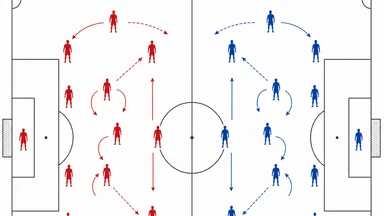
Argentina's approach in 2022 was the opposite: they used aggressive man-marking, with each defender assigned a specific opponent. That system worked well until the final, when France's Antoine Griezmann found a pocket of space near the penalty spot. Vio's 'ghost runs'—misdirection movements designed to pull defenders out of position—are specifically intended to break man-marking schemes. A dummy runner may sprint toward the near post, drawing his marker, while the real target drifts to the far post.
Scouting reports for 2026 now routinely include a 'set-piece fingerprint' section, detailing an opponent's preferred routines, the delivery types, and the players most likely to be targeted. Some teams have even begun practicing against their own set-piece attacks to simulate the pressure. The arms race is expensive: one dedicated analyst can cost roughly $100,000 per year, a fraction of a star forward's salary, but still a significant outlay for smaller federations.
An emerging counter-tactic is the 'flood' defense, where all ten outfield players retreat to the goal line, creating a wall of bodies that is difficult to penetrate. This approach, popularized by some lower-league teams, is now being adapted for international football. However, it carries its own risk: if the ball is cleared, the attacking team can quickly recycle possession and deliver a second ball into a disorganized defense. The choice between zonal, man-marking, and hybrid systems is a central tactical decision for defensive set-piece coaches.
Inside Vio's Toolkit: The 'Ghost' Runs and Misdirection
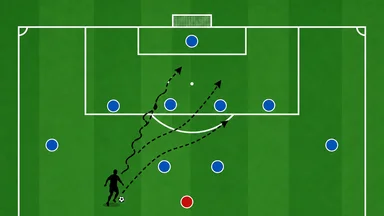
Vio's most famous innovation is the 'ghost run'—a movement that appears to be the main attacking threat but is actually a decoy. The runner accelerates toward the ball, forcing the defender to follow, then peels away at the last moment. The real target, often a taller player or a late arrival, occupies the vacated space. In a 2019 example, Italy's Under-21 team scored against Spain using a ghost run that created a two-on-one situation at the back post.
Another staple is the 'box overload,' in which five attackers crowd the six-yard box, forcing the defense to commit numbers. The routine often involves a short corner to reset the shape, then a delivery to the edge of the area where a midfielder has drifted unmarked. Vio's database includes variants for every possible defensive setup: zonal, man-marking, mixed, and even the rare 'flood' where all defenders retreat to the goal line.
Repetition is the key. Vio's training sessions include 40 repetitions of a single routine, with minor adjustments after each set. The goal is to make the movement automatic, so that under the fatigue of extra time, the attacker does not have to think. He has described his training ground as a 'laboratory,' where data from each repetition is fed back into the model.
Critics argue that over-rehearsal can make routines predictable. If an opponent studies enough tape, they may anticipate the ghost run or the box overload. Vio's response is to build redundancy: each routine has multiple variations, triggered by a signal from the taker. The best set-piece attacks are not rigid but adaptive, responding to the defense's alignment in real time.
One specific variation that has gained attention is the 'near-post flick-on,' where a shorter player at the near post glances the ball toward the far post, where a taller teammate is arriving. This routine exploits the tendency of defenders to watch the ball rather than the runners. Vio's database includes over 200 such variations, each coded for specific match situations: trailing by one, level with ten minutes to go, or protecting a lead. The level of granularity is unprecedented in the history of set-piece coaching.
National Team Adoption: Why Federations Now Hire Full-Time Specialists
The trend toward hiring dedicated set-piece coaches accelerated after the 2022 World Cup. Germany's appointment in 2024 was widely reported, with the federation citing the need to 'close the gap in set-piece efficiency' after a disappointing group-stage exit. Brazil followed in 2025, hiring an analyst from the Vio school of coaching. Even smaller nations like Japan and Morocco have added part-time specialists.
One reason is the favorable cost-benefit ratio. A specialist's salary is modest relative to the potential return. In a tournament where a single goal can be worth millions in prize money and sponsorship, the investment is rational. FIFA's 2025 rule change on wall distance—increasing the minimum distance from 9.15 meters to roughly 10 meters—has also created new opportunities for direct free-kick takers, further incentivizing specialist coaching.
Yet the adoption is not universal. Some traditionalists argue that set-piece coaching detracts from the fluidity of open play. They worry that players become reliant on routines rather than improvisation. Vio himself has acknowledged that set pieces are a complement, not a substitute, for good football. In his view, the best teams use dead balls as a weapon within a broader tactical framework.
For the 2026 tournament, it is likely that every team that reaches the knockout stage will have at least one set-piece specialist on staff. The question is no longer whether to invest, but how to integrate the specialist into the broader coaching team. Some federations have placed the set-piece coach in a separate silo, while others have made them a full member of the tactical staff. The latter approach seems to yield better results, as the routines can be tailored to the team's overall style.
A notable example of integration is the Dutch national team, which in 2023 appointed a set-piece coach who also serves as an assistant for open-play tactics. This dual role ensures that set-piece routines are not isolated from the team's general attacking principles. The Netherlands' set-piece conversion rate improved by 15 percent in the following year, a testament to the value of integration. Other federations are now considering similar structures.
The 2026 Knockout Scenarios Where Vio's Blueprint Tilts Results
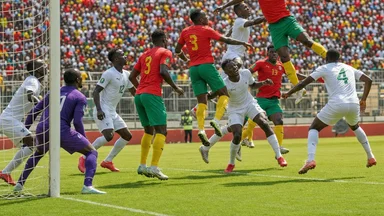
Consider a plausible round-of-16 match between two evenly matched sides. The game is tight, with both teams generating roughly 0.8 xG from open play. A corner kick in the 70th minute, rehearsed 40 times in training, produces a goal. The team that scored advances. In a tournament where knockout matches are often decided by a single goal, that scenario is not hypothetical; it has played out in multiple World Cups.
In the quarterfinals, extra time is common. Fatigue sets in, and open-play creativity declines. A free kick in the 105th minute, delivered to a pre-arranged target, becomes the decisive moment. Vio's database includes routines specifically designed for fatigue situations, where the defense is slower to react and the attacking team can exploit gaps.
The semifinals and final bring the highest pressure. In 2022, the final between Argentina and France was decided by penalties, but both set-piece goals (Argentina's from a corner, France's from a penalty) were crucial. Vio's blueprint for 2026 includes routines for late-game scenarios: a corner when trailing by one, a free kick when level, a long throw when the opponent is defending deep.
Yet the blueprint is not infallible. Defenses are adapting, and the arms race means that no routine remains effective for long. The 2026 World Cup may produce a set-piece goal that decides the trophy, but it may also produce a defensive masterclass that neutralizes every routine. The outcome will depend on which team has prepared more thoroughly—and which specialist has done their homework.
One underexplored scenario is the impact of weather conditions. In the 2026 tournament, which will be hosted across North America, matches in June and July may be played in high heat and humidity. Fatigue will be more pronounced, and set-piece routines that rely on precise timing may break down. Vio's database includes a 'heat index' variable, adjusting the number of repetitions and the complexity of routines based on expected conditions. This level of detail may give his clients a further edge in the knockout stages.
Another scenario is the use of set pieces as a psychological weapon. A well-executed routine can demoralize an opponent, especially if it comes against the run of play. Coaches now study the emotional impact of set-piece goals, noting that teams that concede from a dead ball often struggle to regain composure. Vio's routines are designed not only to score but to disrupt the opponent's rhythm, a subtle but potentially decisive factor in high-stakes matches.
Ultimately, the 2026 World Cup will be a laboratory for set-piece innovation. Vio's blueprint, refined over three decades, will be tested against the best defensive minds in the game. The margin between victory and defeat may be measured in inches—the gap between a defender's head and the ball, the timing of a ghost run, the placement of a free kick. In those inches, Vio's legacy will be written.