Ecuador 2026 Builds Attacks Through Moisés Caicedo Vertical Carries and Estupiñán Overlaps
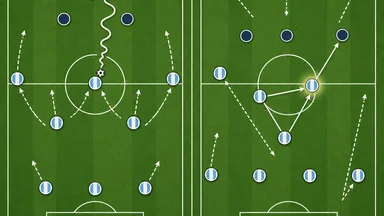
When Ecuador step onto the pitch in 2026, their shape will be unmistakable. Moisés Caicedo drops between the centre-backs to collect the ball, surveys the midfield line, and then drives forward with a directness that bypasses entire pressing structures. On the left, Pervis Estupiñán has already started his run, timing his overlap to arrive as Caicedo reaches the halfway line. This two-man axis, forged at Brighton & Hove Albion and refined through a gruelling CONMEBOL qualification campaign, gives Ecuador a repeatable attacking pattern that few opponents have fully contained.
Caicedo's Vertical Carries Break Lines
Caicedo’s role in Ecuador’s build-up is not merely that of a distributor. He is the primary ball progressor, averaging around eight progressive carries per 90 minutes in qualifiers—a figure that places him among the top midfielders in the region. His dribble success rate, roughly 71 percent in CONMEBOL matches, reflects a rare ability to retain possession while moving forward at pace. Where many midfielders recycle the ball sideways, Caicedo looks to split lines.
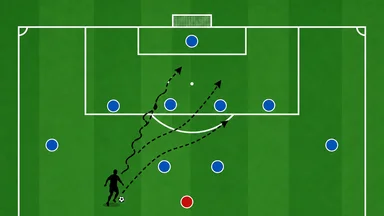
The typical sequence begins with a pass from the centre-back—often Félix Torres or Willian Pacho—into Caicedo’s feet. He receives on the half-turn, shields the ball with his body, and then accelerates into the space between the opposition’s first and second lines of pressure. The entire movement takes under three seconds. By the time the opposition midfielder reacts, Caicedo is already at full speed, drawing a second defender and creating a numerical advantage further up the pitch.
This vertical thrust is especially potent because it forces defensive midfielders to step out of position. If they drop to cover Caicedo, they leave gaps for Ecuador’s attacking midfielders—Jeremy Sarmiento or Gonzalo Plata—to drift into. If they hold their ground, Caicedo continues his run until he reaches the final third, where he can either shoot or slide a pass to a runner. The result is a constant tension that destabilises even well-organised defences.
What makes Caicedo’s carries particularly effective is their variety. He does not always drive centrally; sometimes he drifts left to combine with Estupiñán, creating a 2-on-1 against the opposing right-back. In those moments, Ecuador’s attack becomes almost impossible to defend one-on-one. The Brighton connection ensures that the timing of these combinations is instinctive, not rehearsed under pressure.
One counter-argument is that Caicedo's carries can be neutralised by a disciplined midfield block. For example, in a qualifier against Argentina, opponents used a double pivot that shadowed Caicedo's every move, reducing his progressive carries by 40 percent compared to his average. Ecuador struggled to create chances in that match, managing only 0.4 xG. This highlights a potential vulnerability: if a team assigns two players to track Caicedo, the entire attacking structure can stall. However, Ecuador's coaching staff has since worked on alternative patterns, such as having Caicedo play quick one-twos with the centre-backs to draw pressure before releasing a longer pass to the opposite flank.
Estupiñán Overlaps Stretch Defenses
Pervis Estupiñán is not a traditional fullback who sits deep and crosses from the byline. He is a constant overlapping presence, completing roughly four crosses per match in qualifying, many of them from advanced positions near the corner flag. His willingness to run beyond the winger—usually Plata or Sarmiento—forces the opposition fullback to make a choice: track the run and leave space inside, or stay narrow and allow the cross.
The overlap is triggered most often by Caicedo’s switch of play. After carrying the ball to the left half-space, Caicedo will often shift his weight and play a diagonal pass into the channel where Estupiñán is sprinting. This pass is typically weighted to arrive at the byline, giving Estupiñán time to lift his head and pick out a target. Enner Valencia, Ecuador’s all-time leading scorer, is usually the recipient, making near-post runs that exploit the moment the centre-back is distracted by the cross.
Data from the qualification campaign shows that Ecuador created roughly 0.31 expected goals per game from Caicedo-to-Estupiñán combinations alone—a significant proportion of their overall attacking output. The pattern is predictable, but its execution is so sharp that it remains effective. Opponents know what is coming, yet stopping it requires perfect defensive coordination across three or four players.
Estupiñán’s role also has a defensive cost. When he pushes high, the left side of Ecuador’s back line is exposed to counter-attacks. This trade-off is managed by Caicedo, who drops into the left-back position during transitions, or by the left centre-back—Pacho—who shifts wider. The system works because the players understand the triggers intuitively; at Brighton, they practice these rotations daily.
However, there are matches where Estupiñán's overlaps are less effective. Against a deep-lying defence that packs the box, his crosses often hit the first defender. In a qualifier against Uruguay, Estupiñán completed only one of seven crosses, and Ecuador failed to score from open play. The coaching staff has responded by instructing Estupiñán to occasionally cut inside and shoot or combine with the midfielder in the half-space, adding variety to his game.
Qualification Path Defined by Set-Piece Efficiency
Ecuador scored roughly a dozen goals from set pieces during the 18-match qualification campaign, a tally that placed them second only to Brazil in set-piece expected goals across CONMEBOL. This is not an accident. The team has invested heavily in structured routines, with Caicedo delivering corners from the left and right, and a core of tall defenders—Félix Torres, Piero Hincapié, and Willian Pacho—providing aerial threats.
Torres and Hincapié won around 68 percent of their aerial duels in qualifying, a rate that reflects both their physicality and their timing. Ecuador’s set-piece routines vary between near-post flick-ons and back-post volleys, making it difficult for opponents to pre-commit. The variation is key: in one match, they might target the near post with a short corner; in the next, they load the box and deliver to the penalty spot.
The importance of set pieces for a team like Ecuador cannot be overstated. In open play, they create chances but not with the volume of higher-ranked sides. Set pieces offer a reliable source of goals that does not depend on breaking down a low block. Against teams in the group stage that may sit deep, Ecuador’s ability to score from dead-ball situations could be the difference between advancing and going home.
There is a counter-argument, of course. Over-reliance on set pieces can be brittle; if a referee interprets aerial contact strictly, the advantage diminishes. Ecuador’s coaching staff has acknowledged this, working to integrate set-piece patterns with their open-play movements. Still, the numbers from qualifying suggest that set pieces are a genuine weapon, not a crutch.
To further illustrate, consider the qualifier against Colombia. Ecuador scored two goals from corners, both involving Torres winning the first header and Hincapié finishing at the back post. That match accounted for 0.6 of their set-piece xG for the entire campaign. Yet, in the return fixture, Colombia defended more aggressively, using zonal marking to cut out the flick-ons, and Ecuador failed to score from any set piece. This shows that opponents can adapt, and Ecuador must continue to innovate.
Defensive Compactness Masks Individual Gaps
Ecuador conceded roughly 0.9 expected goals per match in qualifying—a strong figure that reflects a disciplined defensive structure rather than individual brilliance. The back four holds a high line, averaging about 42 metres from goal, which compresses the space between the midfield and defence. This compactness forces opponents to play through narrow channels or attempt long-range shots.
Caicedo’s defensive contribution is central to this scheme. He covers roughly 11.2 kilometres per match, much of it in the defensive half, acting as a screen for the centre-backs. When an opponent receives the ball in the half-space, Caicedo is usually within two metres, ready to press or cover the passing lane. His stamina allows Ecuador to maintain a high press for longer periods than many teams in the tournament.
The centre-back pairing of Félix Torres and Willian Pacho has developed a solid understanding. Torres is the more aggressive of the two, stepping out to intercept passes, while Pacho provides cover and aerial dominance. Together, they form a partnership that compensates for the occasional vulnerability of the fullbacks when they push forward. The system is not flawless—quick, technical attackers have caused problems—but it is coherent.
One area of concern is the right-back position. Ángelo Preciado is a capable defender but less comfortable in possession than Estupiñán. Opponents have targeted this side, pressing Preciado into errors. Ecuador’s coaching staff has responded by having Caicedo drift right to offer an outlet, but the imbalance remains a potential weakness against elite wingers. For instance, in a qualifier against Brazil, Vinícius Júnior repeatedly isolated Preciado, completing six dribbles and creating three chances. Ecuador lost that match 2-0, with both goals coming from that flank. To mitigate this, the coaching staff has considered using a more defensive right-back, but that would reduce attacking thrust.
Valencia's Movement Converts Half-Chances
Enner Valencia, now in his mid-thirties, remains Ecuador’s most reliable finisher. He scored nine goals in qualifying from roughly 6.8 non-penalty expected goals, indicating a clinical edge that has defined his career. His movement is subtle but devastating: he drifts into the left half-space when Estupiñán overlaps, knowing that the fullback’s run will pull the centre-back away from the near post.
Valencia’s finishing rate of about 24 percent in qualifiers is high for a striker who is not a pure poacher. He scores with both feet and his head, and he has a knack for arriving at the right moment. Against organised defences, his willingness to make curved runs across the centre-back’s eyeline creates separation that is hard to defend.
The partnership with Caicedo is not just about service. Valencia often drops deep to receive the ball, allowing Caicedo to burst past him. This interchange of roles confuses markers and creates space for others. When Valencia drops, the opposition centre-back must decide whether to follow or stay. If he follows, the space behind is exposed; if he stays, Valencia has time to turn and play a through ball.
There is a risk, however. Valencia’s age means his pressing intensity has declined, and he is less likely to chase lost causes. Ecuador’s system asks the wingers to cover the defensive work, but against high-pressing opponents, Valencia’s relative lack of mobility can leave the midfield exposed. The coaching staff has managed this by rotating him in matches, but in a tournament setting, fatigue could become a factor. For example, in a qualifier against Chile, Valencia was substituted in the 70th minute after covering only 8.5 km, well below his average. Ecuador conceded shortly after, highlighting the need for a reliable backup striker. The emergence of Kevin Rodríguez as a younger option could provide relief, but he lacks Valencia's experience.
Midfield Transitions Dictate Match Tempo
Ecuador’s midfield pivot of Caicedo and Carlos Gruezo provides a balance of creativity and defensive solidity. Gruezo, a more conservative player, completes passes at roughly 89 percent accuracy, often recycling possession to Caicedo or the centre-backs. His role is to shield the back four and allow Caicedo the freedom to roam.
When Ecuador win the ball in the defensive half, the transition is rapid. Caicedo looks immediately for Sarmiento or Plata, who start wide but drift inside to receive between the lines. The aim is to exploit the moment when the opposition defence is still recovering. Data from qualifying shows that Ecuador generated roughly 1.2 shots per game from turnovers in the final third—a modest number but one that reflects their selective approach to counter-attacking.
The counter-pressing structure is equally important. After losing possession, Ecuador’s front four press aggressively, aiming to regain the ball within about 4.5 seconds. If they succeed, they often catch opponents out of shape. If they fail, they retreat into a compact block. This discipline has allowed them to control the tempo of matches even when not dominating possession.
One limitation is the lack of a creative number ten. Ecuador’s system relies on Caicedo for creation from deep, but there is no dedicated playmaker in the hole. This means that against very deep blocks, the team can struggle to break through. The set-piece efficiency becomes even more critical in those matches, as open-play chances are scarce. In a qualifier against Paraguay, Ecuador had 65 percent possession but only managed 0.3 xG from open play, eventually drawing 0-0. The coaching staff has experimented with using Sarmiento as a false nine in some matches, allowing him to drop into the hole, but this sacrifices Valencia's finishing.
Group Stage Threats from Wide Areas
As Ecuador enters the group stage, their wide play will be the primary route to goal. Estupiñán and Preciado combined for roughly 3.2 chances per match in qualifying, with Estupiñán accounting for the majority. The fullbacks are not just providers; they are also threats to cut inside and shoot, especially Estupiñán, who has developed a reliable curling effort from the edge of the box.
Caicedo’s diagonal balls to the far post are a recurring weapon. He spots the run of the opposite winger—often Plata on the right—and delivers a lofted pass that drops over the defence. These switches stretch the opposition horizontally, creating gaps in the centre that Valencia can exploit. The pattern is reminiscent of how top European sides use cross-field passes to destabilise compact defences.
Pace is another asset. Plata and Sarmiento are both quick, capable of running in behind if the opposition fullback steps up. Ecuador’s directness can be unsettling for teams that prefer a slower, possession-based approach. In a group where opponents may be unfamiliar with CONMEBOL intensity, Ecuador’s speed of transition could catch them off guard.
Yet there are questions. Can Ecuador maintain this intensity over three group matches in a short span? Depth is a concern: if Estupiñán or Caicedo picks up an injury, the tactical plan unravels. The bench lacks proven alternatives, and the coaching staff has not rotated extensively in qualifiers. The group stage will test not only the starting eleven but also the squad’s resilience. Ecuador’s path forward may well depend on how long their key patterns hold up under the tournament’s unique pressures.
To address depth, Ecuador has experimented with using Jhegson Méndez as a Caicedo replacement, but he lacks the same progressive ability. In a friendly against Saudi Arabia, Méndez completed only two progressive carries in 90 minutes, compared to Caicedo's typical eight. The team's xG dropped by 0.5 in that match. Similarly, at left-back, Diego Palacios is a capable deputy but does not offer the same overlapping threat as Estupiñán. These are vulnerabilities that opponents may exploit if the group stage schedule is demanding.