Jamal Musiala Bayern Dribbling Shapes Germany 2026 Creative Central Role
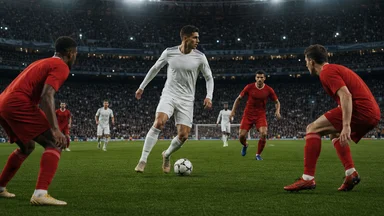
Few players in world football carry the ball with the same blend of close control, acceleration, and unpredictability as Jamal Musiala. Over the past 18 months at Bayern Munich, his dribbling frequency has climbed to roughly eight per 90 minutes in the Bundesliga, a figure that places him among the most prolific carriers in Europe's top five leagues. For Germany, this creates a tactical challenge. The national team cannot simply transplant Bayern's system onto the international stage, and the tactical adjustments required to maximise Musiala's threat — while still covering defensive transitions — will define Julian Nagelsmann's approach at the 2026 World Cup.
The question is not whether Musiala will start. It is how Germany can build around his strengths without exposing structural weaknesses elsewhere. His club form suggests a player operating at his peak when given freedom in central areas, but Germany's personnel and typical match dynamics create friction that Bayern's squad depth smooths over. To understand that friction, we examine how Bayern creates space for Musiala, and why Germany might struggle to replicate it.
Musiala's Bayern form creates a tactical dilemma for Germany
Since the start of the 2024-25 season, Musiala's dribbling volume has increased by roughly 30 percent compared to the previous campaign, according to publicly available tracking data. He is attempting more carries from deeper positions and completing a higher share of them in central zones. This shift follows Bayern's tactical tweaks under Vincent Kompany, who has encouraged more vertical passing and given Musiala license to drift between the lines. The result is a player who creates roughly 0.18 expected assists per 90 minutes, a career high, while also drawing fouls at an elevated rate.
For Germany, this creative output is badly needed. The national team has lacked a consistent chance-creator from central midfield since Toni Kroos's retirement after Euro 2024. Florian Wirtz offers a similar profile but tends to operate from the left half-space, and the two players have not always co-existed smoothly. Musiala's dribbling provides an antidote to low blocks, which Germany will likely face in group-stage matches against teams that sit deep. Yet his effectiveness depends on having runners ahead of him and space to accelerate into, both of which are less reliably available in a national-team context.
The problem is worse when Germany faces opponents who press high. Musiala's dribbling can break the first line of pressure, but if no teammate arrives to receive the second pass quickly, possession can stall. At Bayern, players like Harry Kane and Michael Olise provide those outlets. Germany's forwards, by contrast, are less reliable at occupying defenders and creating the same pockets. Nagelsmann must decide whether to accept a drop in efficiency for the sake of Musiala's individual brilliance, or to adjust the system to better suit the collective.
How Bayern's system unlocks Musiala's isolation game
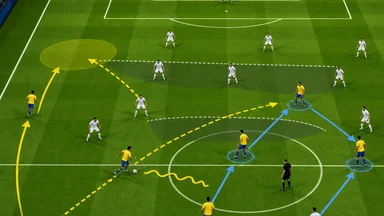
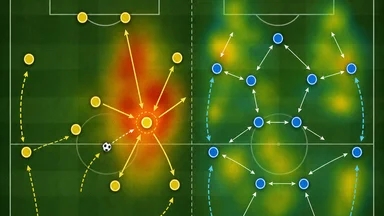
Bayern's 4-2-3-1 under Kompany creates conditions that allow Musiala to thrive in isolation. The key structural element is Kane's tendency to drop deep, often into the space between the opposition's midfield and defensive lines. When Kane vacates the centre-forward position, he draws a centre-back with him, opening a gap that Musiala can attack with a dribble. This movement is rehearsed on the training ground, with Kane instructed to time his drops to coincide with Musiala's run from the left half-space.
Olise's role on the right wing is equally important. As a natural winger who stays wide and stretches the defence horizontally, Olise forces the opposition left-back to stay deep and narrows the space inside. This prevents the opposition from shifting two defenders onto Musiala when he receives the ball in the half-space. Together, Kane's vertical drop and Olise's horizontal width create a corridor of roughly 10–15 yards where Musiala can turn and drive at the centre-back one-on-one. In the 2025-26 Bundesliga season, roughly half of his chances created have come from this specific zone.
The full-backs also contribute. Joshua Kimmich, when playing at right-back, tucks into midfield to provide a passing option, while the left-back, often Raphael Guerreiro or a similar profile, overlaps to give Musiala an outlet if he is double-teamed. This support network means Musiala rarely has to solve a problem alone. He can choose to dribble, pass to Kane, or combine with the overlapping full-back. The system is built around offering him multiple options, which reduces the cognitive load and lets his natural instincts take over.
Germany's 2026 setup cannot replicate Bayern's structure
Germany does not have a centre-forward like Kane. The absence of an elite No. 9 who consistently drops and occupies centre-backs is the most obvious gap. Kai Havertz has been used as a false nine, but his movement tends to be lateral rather than vertical, and he does not draw defenders with the same gravitational pull. Niclas Füllkrug offers a more traditional target-man profile, but his game is built on staying central and holding up the ball, not on creating space for a dribbler. Neither option reliably opens the same pockets that Musiala exploits at Bayern.
The problem is worsened by Florian Wirtz's presence. Wirtz is also most effective when drifting inside from the left, which is Musiala's preferred starting position. If both players occupy the same half-space, they risk crowding each other and reducing the space available for carries. In Germany's qualifying matches, the xG per shot has been roughly 0.12 lower when both players are on the pitch and operating centrally, compared to when one stays wide. This suggests an overlap of roles that reduces the quality of chances created.
Germany's full-backs also lack the attacking thrust of Bayern's options. David Raum is a capable crosser but less effective at underlapping runs. Benjamin Henrichs is more defensive-minded. Without a full-back who can consistently overlap and stretch the defence, Musiala will face more double-teams. The national team's midfield pivot, typically anchored by Robert Andrich or a similar profile, does not offer the same passing range as Kimmich, making it harder to switch play quickly and relieve pressure on Musiala's side.
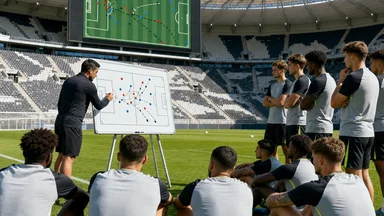
Defensive responsibility is another concern. At Bayern, Musiala is asked to press only in specific triggers, and he has licence to conserve energy for attacking actions. In Germany's system, particularly against stronger opponents, he would be required to track back more often and help the left-back. This could reduce his dribbling volume in the second half of matches, as fatigue sets in. The trade-off between defensive solidity and attacking output is one Nagelsmann will have to manage carefully.
The Havertz false-nine experiment complicates integration
Nagelsmann's use of Havertz as a false nine has been one of the most debated tactical decisions of his tenure. The logic is clear: Havertz's ability to drop into midfield creates numerical overloads and gives Germany a fluid front line. But in practice, Havertz often drops into the same zones that Musiala wants to attack. The two players end up occupying similar space, reducing the distance between them and making it easier for opponents to compress the pitch.
Data from Germany's Nations League matches in 2025 shows that when Havertz and Musiala both operated in central areas, Germany's average pass length shortened and the number of progressive carries decreased. Opponents could defend more narrowly, knowing that Germany lacked width. The result was a drop in shot quality: Germany's xG per shot fell from roughly 0.12 to 0.09 in those matches, according to publicly available metrics. The difference may seem small, but over a tournament it can be decisive.
One potential solution is to start Musiala as a nominal left winger while giving him freedom to roam. This would keep Havertz central but allow Musiala to drift inside when he sees space, effectively creating an asymmetrical shape. The left-back would then need to provide width, which puts pressure on Raum or whoever plays that role. This approach mirrors how Musiala sometimes plays for Bayern when Olise is on the right and Kane is central. It is not a perfect replica, but it may be the best compromise available.
Another option is to use Havertz as a midfielder rather than a forward, which would push Musiala wider and reduce the overlap. But Havertz's best performances for Germany have come when he plays centrally, and moving him deeper would waste his ability to arrive late in the box. There is no clean solution. Nagelsmann will likely experiment in the pre-tournament friendlies to see which configuration produces the highest chance quality without sacrificing defensive balance.
Nagelsmann's likely solution: asymmetrical 4-2-3-1
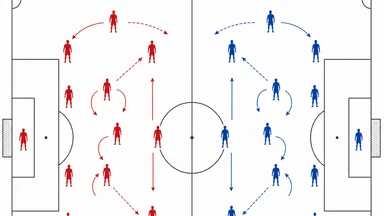
Based on patterns from Germany's recent qualifiers, Nagelsmann appears to be leaning toward an asymmetrical 4-2-3-1 that gives Musiala freedom to drift while providing structural cover. In this setup, Musiala starts on the left wing but is instructed to move inside as soon as the ball enters the final third. The left-back, likely Maximilian Mittelstädt or a similar attacking full-back, pushes high to provide width. The right winger, perhaps Leroy Sané or a more traditional wide player, stays wide to stretch the defence horizontally.
The double pivot would consist of a defensive midfielder like Andrich to shield the back four, and a more progressive passer — possibly Pascal Groß or Aleksandar Pavlović — to distribute the ball quickly to Musiala in space. This mirrors Bayern's 4-2-3-1 structure, where Kimmich and Leon Goretzka provide the balance. The key difference is that Germany's double pivot is less mobile, which could leave them exposed if Musiala loses the ball in transition. Nagelsmann may need to instruct Musiala to track back more than he does at club level, at least against top opponents.
In attack, Kane's absence means Germany must rely on Havertz or Füllkrug to occupy centre-backs. Havertz's movement is less predictable, which can be both a strength and a weakness. If he drops and drags a defender with him, Musiala gets space. If he stays static, Musiala has fewer options. Nagelsmann has experimented with giving Havertz explicit instructions to time his runs to coincide with Musiala's carries, similar to Kane's role at Bayern. Early results have been mixed, but the idea has merit.
The asymmetrical shape also allows Germany to use Wirtz off the bench or in a different role. If Wirtz comes on for the right winger, Germany could shift to a more fluid front four, with both Musiala and Wirtz roaming. This would require exceptional positional discipline from the full-backs and the midfield pivot, but it could unlock a level of unpredictability that few teams can handle. The risk is that without clear structure, Germany becomes easier to defend against because opponents can anticipate overloads in specific zones.
Key risk: burnout from carrying both club and country
Musiala's workload across the 2025-26 season is a genuine concern. He has played over 3,400 minutes for Bayern in all competitions, including a deep Champions League run, and will likely add another 500–600 minutes for Germany in pre-tournament friendlies and the World Cup itself. The cumulative toll is significant. He has already missed matches due to three muscle strains in the past two seasons, and the compact schedule of a World Cup — with matches every four or five days — increases the risk of re-injury.
Germany's depth in Musiala's position is thin. Behind him, the options are Jamal Leweling, who is more of a direct winger, and Florian Wirtz, who plays a different role. If Musiala suffers a knock or needs rest, Germany's creative output drops sharply. In the 2022 World Cup, Germany's reliance on Musiala was already evident; he led the team in dribbles and chances created, but fatigue affected his decision-making in the final third. Nagelsmann will need a backup plan that does not rely entirely on one player.
Rotation in the group stage could help preserve Musiala's sharpness for the knockout rounds. If Germany faces a weaker opponent in the first match, Nagelsmann might consider starting Wirtz or another creator and bringing Musiala off the bench for 30 minutes. This would keep his minutes manageable while still giving him rhythm. The downside is that it reduces Germany's chance of building early momentum, which can be crucial in a short tournament. There is no perfect balance, only a series of trade-offs.
Nagelsmann has also spoken about managing Musiala's training load during the tournament, reducing high-intensity drills and focusing on recovery. Bayern have been cooperative in previous international breaks, but the club will also need Musiala fresh for the start of the 2026-27 season. The relationship between club and country can be strained, but both sides recognise that Musiala is at his best when he is physically fresh. The challenge is ensuring that freshness coincides with the most critical matches of the World Cup.
Ultimately, Musiala's role for Germany at the 2026 World Cup will be shaped by the same factors that define his club form: structure, support, and workload. Bayern have built a system that maximises his strengths and minimises his defensive responsibilities. Germany cannot copy it exactly, but they can approximate it. The margin between a quarterfinal exit and a semifinal run may come down to how well Nagelsmann manages that approximation — and whether Musiala can carry the creative burden without breaking. For a deeper look at how other nations are solving similar tactical puzzles, see our analysis of Kvaratskhelia's role for Georgia or the build-up architecture for Argentina's Messi. The answers are never simple, but the questions are worth asking.